Tuesday, November 24, 2009

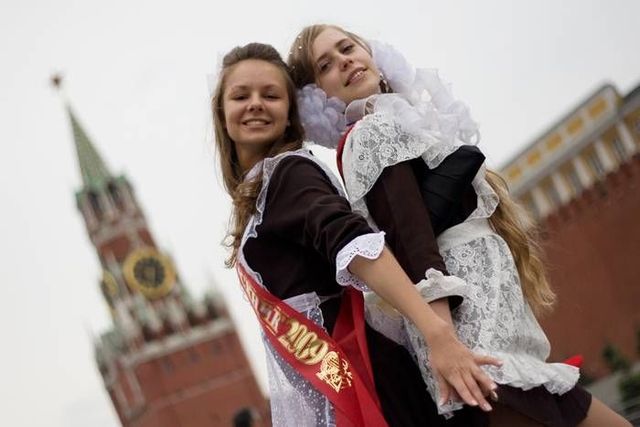
How Russian youth celebrates their graduation day (60 pics)

It is a very important day for the Russian high school students, because next it’s an adult life that is waiting for them.
That's why they try to make a big party and to have fun.


How Russian youth celebrates their graduation day (60 pics)

Girl in school military

I don’t know why but I love girls in uniforms. There’s something about it. And when they have guns – it’s just the best. I find it very sexy )
Do you remember bonus pictures with a smoking hot girl, a car and a gun? I put this pics in my bookmarks. Just for the record – her big breasts have nothing to do with it ;)


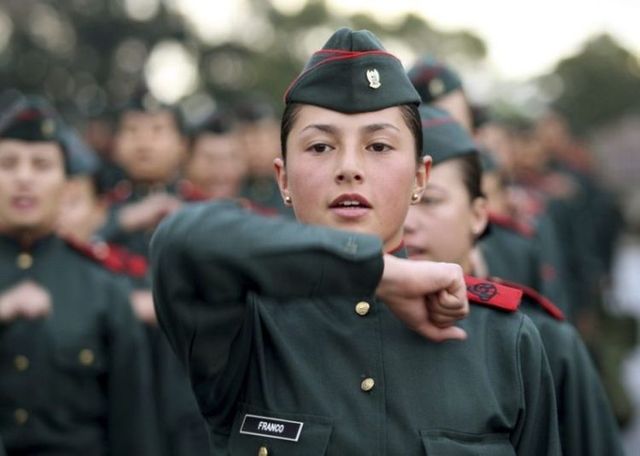
Girls in military school of Colombia (13 pics)

Monday, November 23, 2009

valentine khmer


Obama's 2009


Military woman


COP15

he pre-Christmas winter period in Copenhagen promises to be a hot affair, at least if the militant activist group Never Trust A Cop (NTAC) has anything to do with it. A YouTube video and the organisation’s website seem to be issuing a call to militant activists across Europe to take firm action in Copenhagen during the conference.
“The COP15’s inevitable talk of ‘saving the world from the climate crisis’ is an elaborate hoax to disguise the COP15’s true purpose: to restore the legitimacy of global capitalism by inaugurating an era of “green” capitalism,” the organisation says on its webpage.
“It is time to state why we think that insurrection is needed to actually begin the change everybody is so desperate for,” it adds.
In its YouTube video, the organisation shows still pictures of fires in Copenhagen streets and clashes between Danish police and activists.
“In Copenhagen 7th – 18th December, COP15 will try to get capitalism back on track. We don’t. We will go to Copenhagen to show a dead system how to die,” the video says.
Police aware of group
The COP15 police task force is aware of the network.
“We have always known that there are groups who want to set another agenda and are only coming to Copenhagen to make trouble,” says Assistant Commissioner Mogens Lauridsen who heads the task force.
Inner city
In its on-line material, NTAC is urging militants to remain in the inner city during a major demonstration tabled for December 12 at the Bella Centre, where COP15 is being held.
“You have a choice! Make your voice heard - refuse to be herded. Stay in the city. Choose your own space and way of protest. We need all forms of action to achieve real change,” NTAC says on its website.
NTAC says it was formed as a network to mobilise ‘the radical left’ towards the COP15 summit in Copenhagen and claims that having achieved its mobilisation, the network has been dissolved, leaving individual groups to take action independently.
Previous summits
Previous summits in Gothenburg in 2001 and particularly at the G8 meeting in Rostock in 2007 have ended in violent street battles between police and activists.
“We have seen what happened in Rostock. We will do everything to avoid street battles – but we probably won’t be able to completely avoid trouble, if that is the agenda that is being set,” Lauridsen says.
He adds that it will make things easier for police if activists remain in the inner city during the Dec. 12 demonstration rather than joining the demonstration at the Bella Center.
“If they split off and remain in the city, it’s easier for us to manage them. Overall it’s more difficult to handle if they hide in a large group of peaceful demonstrators and we have to go in and get them,” Lauridsen says, adding that the police force feels well-prepared for the job at hand

COP15 militants on warpath

COP15 militants on warpath

A network of militants appears to be promising trouble at the COP15 climate summit in December.

Sunday, November 22, 2009

Girl Soldiers 18-year-old

Girls, soldiers, women: 18-year-old inductees in the Israeli army
papo-israeli-army-girl-soldiers-lensculture-photography.jpg
Military kiosk counter, Shaare Avraham, Israel, 2004, © Rachel Papo


Photographer Rachel Papo served in the Israeli army when she was 18 years old. Years later, when she was still trying to come to terms with that confusing period of her life, she returned to the army bases of Israel to photograph a new wave of soldiers in training. Her series, Serial No. 3817131, offers a rare and candid look at the innocent young people who are forced to put their normal lives on "hold" while they prepare to fight deadly wars.
Lens Culture is very happy to present 20 compelling images from that series, accompanied by an articulate and thoughtful text written by the photographer.

Military woman


Apologies to those who saw an imcomplete earlier version of this post on Monday. Slight glitch on the button-pushing front when I was distracted by snails-pace server response times.

It's All about the Rank

New research shows that minorities and women have the highest job satisfaction ratings among those serving in the military.

female, recruits, military

F-15E Strike Eagle


The F-15E Strike Eagle is a superior next generation multi-role strike fighter that is available today. Its unparalleled range, persistence and weapons load make it the backbone of the U.S. Air Force (USAF). A complement of the latest advanced avionics systems gives the Strike Eagle the capability to perform air-to-air or air-to-surface missions at all altitudes, day or night, in any weather.
A derivative of earlier F-15 model aircraft (A-D), the F-15E Strike Eagle includes the following attributes:
  • Unmatched combat radius and persistence
  • Advanced digital electronic controlled higher thrust engines
  • Max speed greater than twice the speed of sound
  • More than 23,000 pounds of payload, including air-to-air and air-to-ground weapons such as the:
    • the Joint Direct Attack Munition (JDAM)
    • the AGM-130
    • the Advanced Medium Range Air-to-Air Missile (AMRAAM)
    • AIM-9X

  • An Active Electronically Scanned Array (AESA) radar
  • A digital threat warning system
  • A Service life that will allow it to be viable until at least 2035
The F-15E is produced by Boeing and will be in the U.S. Air Force (USAF) inventory well into the 21st century

Friday, November 20, 2009

Govt seizes Thai airport firm


THE government took control of the Thai-owned aviation firm Cambodia Air Traffic Services (CATS) on Thursday and banned its Thai employees from the offices after the arrest of one of their co-workers on suspicion of stealing the flight schedule of fugitive Thai former prime minister Thaksin Shinawatra during his visit to Cambodia last week.

The move, which is likely to further damage diplomatic relations between the two countries, comes amid accusations by a Thai opposition leader that Thailand’s foreign minister ordered the theft.

CATS is a fully owned subsidiary of Bangkok-based Samart corporation, which has a 32-year air traffic control concession and employs nine Thai nationals in Cambodia.

It has been placed under the caretakership of a Cambodian government official, though representatives from the Civil Aviation Authority declined to comment on the official’s identity or the duration of the caretakership.

“The caretaker has prohibited the Thai expatriates from performing their duties,” Samart vice chairman Sirichai Rasameechan said in a letter to Thailand’s stock exchange, where the company is listed.

Council of Ministers spokesman Phay Siphan said Cambodia’s takeover of CATS was “temporary” but necessary “to ensure national security and public safety.” The financial operations of the company, he added, would not be affected.

The move follows last week’s arrest of CATS employee Siwarak Chotipong, a 31-year-old Thai accused of spying, who is currently being held in pretrial detention at Prey Sar prison.


Thaksin is not the prime minister of cambodia – he is a convicted man....


Cambodian officials say that Siwarak was ordered to steal the flight schedule by Kamrob Palawatwichai, the first secretary of the Thai embassy in Phnom Penh. Kamrob was expelled last week, and Thailand responded by expelling the first secretary of the Cambodian embassy in Bangkok.

Both countries had already withdrawn their respective ambassadors in the row over Thaksin’s appointment as government economics adviser.

Siwarak is being charged under Article 19 of the 2005 Law on Archives, which covers offences related to matters of national defence, security or public order. If convicted, he faces up to 15 years in prison.

Kav Soupha, Siwarak’s defence attorney, said Thursday that he did not believe that the leaking of Thaksin’s flight schedule constituted a threat to Cambodia’s national security.

“Thaksin is not the prime minister of Cambodia – he is a convicted man who is being hunted by Thai authorities,” Kav Soupha said. “Even if [Siwarak] had reported to the Thai embassy, that would be according to his right and obligation as a Thai citizen to alert authorities about a fugitive.”

Kav Soupha added that he planned to request that Siwarak be released on bail.

Jatuporn Prompan, a parliamentarian from the opposition Puea Thai party, said Wednesday that he had an audio tape of Thai Foreign Minister Kasit Piromya ordering the flight schedule theft of which Siwarak is accused, the Bangkok Post reported.

Thai Foreign Ministry deputy spokesman Thani Thongphakdi, however, said officials in his ministry “do not believe in the existence of such a tape”.

Cambodian Foreign Ministry spokesman Koy Kuong said he had no knowledge of such evidence.

Kasit said Thailand would have to gather further information about the CATS takeover before formulating a response.

“The ministry is waiting for reports from the Thai embassy and we will also have to get clarification from the Cambodian government. If it violates bilateral agreements, then we will find ways to proceed from there,” the Bangkok Post quoted Kasit as saying.

Secrecy ordered
As tensions between Thailand and Cambodia simmered, the government released a directive on Wednesday in which the Ministry of Interior called on all government officials to encrypt their communications to “protect information related to national security”.

The statement, signed by Interior Minister Sar Kheng on October 15, touted, without specifically describing, newly acquired encryption technology that will “guarantee secrecy, so that government information will not be leaked”.

Interior Ministry spokesman Khieu Sopheak said such measures were necessary in Cambodia’s present diplomatic circumstances.

“If Thaksin would have been arrested because of [Siwarak] leaking information about him, that would prove we could not keep sensitive information a secret.”

Wednesday, November 18, 2009

sing khmer


Tuesday, November 17, 2009

music khmer


sing khmer


Sunday, November 15, 2009

Joining APEC seen as likely for Cambodia

CAMBODIA will be well-placed to gain Asia Pacific Economic Cooperation forum (APEC) membership if a moratorium on new members is allowed to lapse as expected at the ongoing APEC summit in Singapore, sources in Singapore said Thursday.
Among the dozen nations applying to join the trade and investment forum, India and Cambodia are in the strongest position, the sources said, speaking on condition of anonymity. India is in line for acceptance due to the sheer size of its economy, and Cambodia because it already supports open trade and is a member of the World Trade Organisation and ASEAN.
Cambodia also has a coastline open to the Pacific, which other aspiring members such as Mongolia and Laos do not.
APEC, which seeks to liberalise trade and investment in the Asia-Pacific region, currently has 21 members.
After it was formed in 1989, APEC expanded rapidly before placing a moratorium on new members in 1993. The moratorium, which was originally set to expire in 1996 but has been extended several times, is now set to expire in 2010. It is expected that it will not be renewed in Singapore.
US officials said Cambodia would be a welcome addition because Phnom Penh’s foreign policy supports a more liberal trading system.
Singapore’s senior minister, Goh Chok Tong, will visit Cambodia at the end of this month.
APEC agreed the “Bogor Declaration” in 1994 to create free trade among its developed economies by 2010 and emerging economies by 2020.

Diplomats expelled in tit-for-tat


CAMBODIA and Thailand expelled senior diplomats from their respective embassies on Thursday, the same day that fugitive Thai former prime minister Thaksin Shinawatra told an audience in Phnom Penh that Thailand’s current leadership is guilty of “false patriotism”. “We declared the first secretary of the Thai embassy as persona non grata,” Cambodian Ministry of Foreign Affairs spokesman Koy Kuong said. “We just declared that, and then Thailand reciprocated, meaning our first secretary to the Cambodian embassy in Bangkok will come back, too.” Asked to explain the Cambodian government’s decision, Koy Kuong said only that the Thai first secretary “performed his duty contrary to his position”. Council of Ministers spokesman Phay Siphan said the expulsion was the result of Thailand being “arrogant”. “Cambodia did not make the first move. This follows the recall of the Thai ambassador,” he said. “We should respect each other through diplomatic channels, but Thailand doesn’t respect them. They overreacted.” Thai Ministry of Foreign Affairs deputy spokesman Thani Thongphakdi confirmed the expulsion, though he added that both countries have maintained personnel at their respective embassies. “We still have a presence, and they, too, still have a presence. The channel of communication is still open,” he said. The expulsions mark the latest step in the countries’ ongoing row over Cambodia’s appointment of Thaksin as a government economics adviser. In response to this appointment, Thailand withdrew its ambassador to Cambodia last week, and Cambodia responded in kind. Thaksin was deposed in a 2006 coup and self-exiled last year to avoid a prison term for corruption charges. Speaking in his new advisory capacity on Thursday morning, Thaksin emphasised the need for cooperation between Thailand and Cambodia as he told a gathering at the Ministry of Economy and Finance that the two countries’ economic fortunes are inextricably linked. But he added: “Of course, not all my compatriots see it that way right now. “I do not believe those who do not share our vision right now are myopic. Their domestic political compulsions force them to false patriotism. Let’s pray that they, too, will one day appreciate this partnership for progress,” he said. In the conference’s opening address, Finance Minister Keat Chhon said Thaksin’s tenure as prime minister “is generally agreed to have been one of the most distinctive in the country’s modern history”. “Whatever the critics say about Thaksinomics, the achievements were astonishing,” Keat Chhon said. Thaksin and Keat Chhon were speaking at a conference titled “Cambodia and the World After the Financial Crisis”, attended by about 300 economic experts and members of the business community. Security at the conference was heavy, with members of Prime Minister Hun Sen’s personal bodyguard unit providing protection for Thaksin. Members of the media were ushered out of the conference hall minutes after Thaksin began speaking. Following the lecture, Thaksin travelled to Siem Reap, where he visited the Angkor Wat temple complex and planned to play golf with Hun Sen on Friday, Siem Reap provincial Governor Sou Phirin said. The onetime telecommuncations mogul was greeted upon arrival in Siem Reap by members of Thailand’s Red Shirts, and the Bangkok Post reported Thursday that parliamentarians from the opposition Puea Thai party planned to travel to Cambodia “to drink with their former party leader on Friday night until dawn before seeing him off to Dubai on Saturday morning”. In Bangkok, about 150 protesters rallied outside the Cambodian embassy on Thursday and delivered an open letter telling Hun Sen not to interfere in Thailand’s justice system, Thai police said. Speaking before the diplomats’ expulsion Thursday, Thai Prime Minister Abhisit Vejjajiva said he was considering further retaliatory measures against Cambodia. He added, however, that his government would not seal the border, and that the rift with Phnom Penh would not lead to violence. “I don’t want the situation going out of control,” he said.

Thai national arrested for espionage

A Thai national has been arrested and accused of espionage for allegedly stealing the flight schedule of fugitive former Thai Prime Minister Thaksin Shinawatra, amid an ongoing row between Thailand and Cambodia over Thaksin’s appointment as government economics adviser, Phnom Penh police and court officials said. Sok Phal, director of the Ministry of Interior’s Central Security Department, said 31-year-old Siwarak Chotipong, an employee at Cambodia Air Traffic Services Co., was arrested by officers from the Central Security Department at his office on Wednesday. “He stole the special flight schedule of Mr. Thaksin and handed it to the first secretary of Thai Embassy,” Sok Phal said. “It is not his duty to do so. What he did was beyond his responsibility. He must face legal action.” On Thursday, the Cambodian government expelled the first secretary at the Thai embassy in Phnom Penh, with Thailand responding in kind. Cambodia Ministry of Foreign Affairs spokesman Koy Kuong would not confirm whether the expulsion was related to the airport case. “It’s a case of the court. It’s the court’s affair,” he said, adding that the Thai first secretary had “performed his role contrary to his position.” Sok Phal, however, said the first secretary was directly involved and had been expelled as a result. "He ordered the man to copy the schedule of Thaksin's return flight, and that's why he was expelled," Sok Phal said. In Bangkok, Thai Foreign Minister Kasit Piromya forcefully rejected the espionage accusations. "It's not true. It is a malicious and false claim," Kasit said. "Thaksin feels he must destroy Thailand and collaborate with Hun Sen." Thaksin was deposed in a 2006 coup and self-exiled last year to avoid a jail term for corruption charges. Last week, Cambodia announced Thaksin’s official appointment as government economics adviser, prompting Thailand to withdraw its ambassador to Phnom Penh and Cambodia to reciprocate. Phnom Penh court deputy prosecutor Sok Roeun said Sivarak is now in pre-trial detention at Prey Sar prison and is being charged under article 19 of the 2005 Law on Archives, which covers offenses related to matters of national defence, security or public order. If convicted, Sivarak faces a jail term of between seven and 15 years and a fine of between 5 and 25 million riels (US$1198-5990). Police are now investigating whether more people were involved with the plot, Sok Phal said.

Saturday, November 14, 2009

khmer mystery


politic khmer


Red Shirts Meet Thaksin in Cambodia

A dozen of shirted supporters of former Thai Prime Minister Thaksin Sinawatra on Thursday afternoon crossed the border to meet with their fugitive leader in Siem Reap province, about 100 km from Thai border in Sisaket province.
The red shirts showed their support for Thaksin, some with tears, and welcomed Thaksin’s appointment as the PM Hun Sen’s economic advisor.
The meeting came a day after Thaksin gave a lecture on economics to more than 300 Cambodian Gover- nment officials at the Ministry of Economy and Finance on Thursday morning.
According to the source, the red shirts blamed the Bangkok Govern-ment led by Abhisit for Thailand’s economic and social troubles.
Singing “We love Thaksin!” in Thai and English, the protesters, who had crossed the border from northeastern Thailand, gave the billionaire tycoon roses and hugs as he arrived at a hotel in Siem Reap, reported AFP.
“I am very happy to see him. We hug him and he hugs us,” Taradang Chinin, a representative of the group who travelled from their homes in Thailand the previous day, told AFP in the lobby of the Nokor Kokthrok hotel.
“The Thai Government right now is a big cheater. Thaksin, when he was prime minister, he thought about poor people. He shared his love for people. He is very popular,” supporter Taradang said. Meanwhile, according to reports from the Poipet International Border Crossing in Banteay Meanchey province, a group of Thai soldiers warned and stopped some red shirts crossing to Cambodia to meet Thaksin. The black-clad soldiers claimed the red shirts did not hold valid passports so did not allow them to cross the border.
Over 30 red shirts made the trip to Phnom Penh to show their support Thaksin as he was appointed as a Cambodia Government economic advisor by Cambodian King Norodom Sihamoni on October 27.
However, even though Thai black-clad soldiers blocked the red shirts, the border is still normal and citizens can come and go through the border gate as usual.
“Even though the two countries’ diplomatic ties are down, the situation at the Poipet gate is still normal and citizens can do their business as usual,” Banteay Meanchey Sub-Governor Ou Long Dy told DAP News Cambodia on Thursday.
“Thai citizens can come to gamble in Cambodia casinos as usual,” he added. In his lecture on economi cs to Cambodian Government Thaksin recommended that Cambod ia focus on tourism, agriculture, rural development and natural resource extraction.
“I would like to see broadcasting about the tourism field among Cambodia, Laos, and Thailand and each nation should strengthen quality standards and safe tourism services,” Thaksin said.


Thursday, November 12, 2009

Thailand Must Abide by Overlapping Claims Agreement: Var Kim Hong

Thailand must implement the MoUs on gas and oil development and maritime boundary demarcation agreed with Cambodia as part of its international obligations, Var Kim Hong, Cambodian head of the Joint Border Committee (JBC), said on Tuesday.

Thailand cannot cancel or back out of the MoU signed in 2001 with Cambodia “because MoU is the tool of international legal procedures,” he told reporters at a press conference at the Council of Ministers. Thailand must abide by international law, he said.
Thailand may only amend its MoUs with Cambodia as the MoUs are “the heritage of previous Govern- ment,” signed between Cambodia and Thailand under the Thaksin Govern- ment, he added. The Thai Cabinet on Tuesday revoked an MoU on overlapping maritime boundaries agreed and signed by Thailand and Cambodia in 2001, the Thai News Agency (TNA) reported. The Cabinet directed the Ministry of Foreign Affairs to review the legal issues as the revocation of the MoU must be forwarded to Parliament for its consideration under Article 190 of the Thai Cons-titution, which requires the Govern-ment to seek approval from Parliament before signing an agreement with another country. Certain renegade factions of Thai extreme nationalists have already mistakenly attempted to request the withdrawal of Cambo- dia’s UNESCO registration for the Khmer Preah Vihear temple. Now the tactic seems to have crossed into the mainstream.
The Thai Cabinet has apparently discussed the action with several agencies including the Office of the Council of State, the Thai-Cambodian Joint Boundary Commission (JBC) and the ministry’s Department of Treaty and Legal Affairs, before making the decision. Thai-Cambo- dian relations have soured over border issues and Thaksin’s appointment as Cambodian Government and economic advisor to PM Hun Sen last week. Thailand recalled its ambassador from Cambodia, with Cambodia subsequently doing likewise.


Thaksin Lands Phnom Penh Amid Tightened Security

Former fugitive Thai PM Thaksin Sinawatra on Tuesday morning landed at a Phnom Penh military airport.

Tight security with many soldiers and police deployed ensured a safe arrival for Thaksin.
Hing Bun Heang, the Royal Government of Cambodia Air Forces (RCAF) Deputy Chief and Cambodia Prime Minister Hun Sen’s body guard headquarter chief and Prak Sokhun, Secretary of Stare of the Council for Ministers along with the Premier’s oldest son, Hun Maneth accompanied by high ranking soldiers and police.
Thaksin’s arrival in Cambodia come after the Cambodian King endorsed him as advisor to the Government and the premier’s economic advisor. Thaksin’s presence will be his first visit to Cambodia after he was ousted by a military coup in September, 2006. He has previously visited Siem Reap province to play goal with PM Hun Sen.
Following Thaksin’s arrival in Cambodia, Bangkok leaders are said to be focusing on seeking to extradite Thaksin from Cambodia, but the Cambodian Government has already stressed it will not extradite Thaksin from Thailand. “Thaksin will visit Phnom Penh this week and he is to lecture over 300 Cambodian economists at the Ministry of Economy and Finance on Thursday,” the premier told reporters at Phnom Penh International Airport after he returned from Tokyo.
Thaksin, who was prime minister from 2001 to 2006 before being toppled in a bloodless coup, faces a two-year jail sentence in Thailand for abuse of power. He has been living in self-imposed exile, mostly in Dubai, since August 2008.
Thaksin was overthrown after he lost the backing of Thailand’s Bang kok-based middle class and political elite. He remains popular with the poor because of his populist economic policies.
Thailand withdrew its ambassador to Phnom Penh last week after the Cambodian government announced Thaksin’s appointment. Cambodia reciprocated by recalling its ambassador as ties between the neighbors hit their lowest point in years.


Cambodia Refuses to Extradite Thaksin


Prime Minister Hun Sen on Wedn- esday stressed that his Government had already rejected an extradition request for former PM Thaksin Shinawatra because is Thaksin is now an economic adviser to himself and the Government, an appointment approved by the Cambodian king. Bangkok sent a formal extradition letter to the Cambodian Foreign Ministry yesterday.
Speaking to report- ers at a press conference at his house in Takmao after his talks with Thaksin lasting around one-and-a-half hours, Hun Sen read out a statement detailing why the Cambodian Foreign Ministry had handed back Thai documents submitted to seek Thaksin’s extradition.
Thaksin was also present at the press conference.
Thaksin appeared in Phnom Penh after arriving at a military airstrip in his own jet on Tuesday.
Hun Sen showed the Cambodian refusal of the Thai extradition letter in front of Thaksin and handed out a copy of the statement to Thaksin detailing Cambodia’s stance not to extradite Thaksin.
The Cambodian Government referred to Article 3 of the Extraction treaty between the two countries which prohibits extraditing a person for a political offence.
Thaksin said that he understood the extradition request, but he declined to do into the details of his case.
Hun Sen stressed Thaksin’s competency to lead his country during his term as Thai Prime Minister.
The premier claimed a relationship between the ruling Thai Prime Minister Abhisits’ party and Cambo- dia’s eponymous opposition Sam Rainsy Party.
Referring to a rumor that the Thai Government will appoint Sam Rainsy as an advisor, the premier said he welcomed the right of a Cambodian to become a Bangkok Government advisor. Thaksin’s said his intention is to develop Thailand and help all Thais.
Asked how he will help and develop Cambodia as Cambodia suffers the effects of the downturn, Thaksin said: “Firstly, I am going to share some economic ideas to Cambodian Government economic officials to provide more understanding in this field. Secondly, I am trying to help reduce poverty in Cambodia by using my policy implemented Thailand when I was the premier. Lastly, I will attract more investors to do business and invest in Cambodia, and provide confidence to those investors.”
Thaksin said that helping Cambo- dia become developed will also benefit Thailand.

Tight security, with many soldiers and police deployed, ensured a safe arrival for Thaksin.
Thaksin’s arrival in Cambodia comes after the Cambodian King endorsed him as advisor to the Government and the premier’s economic advisor. Thaksin’s presence will be his first visit to Cambodia after he was ousted by a military coup in Septe- mber, 2006. He has previously visited Siem Reap province to play goal with PM Hun Sen.
Thailand withdrew its ambassador to Phnom Penh last week after the Cambodian government announced Thaksin’s appointment. Cambodia reciprocated by recalling its ambassador as ties between the neighbors hit their lowest point in years. Thaksin, who was prime minister from 2001 to 2006 before being toppled in a bloodless coup, faces a two-year jail sentence in Thailand for abuse of power. He has been living in self-imposed exile, mostly in Dubai, since August 2008.
Thaksin was overthrown after he lost the backing of Thailand’s Bangkok -based middle class and political elite. He remains popular with the poor because of his populist economic policies.


The ‘eternal friends’ speak


In a joint interview with Thaksin broadcast on state-run TVK television on Wednesday afternoon, Hun Sen spoke of the partnership between his Cambodian People’s Party and Puea Thai, a Thai opposition party with which Thaksin is associated. Hun Sen also alluded to this partnership when he met with Puea Thai’s Chavalit Yongchaiyudh last month.
“We have a party-to-party relationship between the CPP and Puea Thai, which was originally Thai Rak Thai,” Hun Sen said, referring to Thaksin’s former party.
“Now this party has transformed itself into Puea Thai, but this party relationship continues. The leaders of the CPP and the leaders of Puea Thai can meet each other at any time, at any place, and can even hold a summit meeting together.”
Even as he threw his support behind the Thai opposition, however, Hun Sen dismissed the possibility that the recent row with Thailand could escalating into armed conflict, characterising it as a dispute between politicians rather than populations.
“It is a dispute between Abhisit and Hun Sen,” he said, adding: “If there is a dispute between people and people, how could Thaksin and I be talking together? He is also a Thai.”
In the same interview, Thaksin defended his acceptance of the advisory role and accused the Thai administration of holding a “Cold War” mindset in its antagonism towards him and the Cambodian government.
“Whatever I say, the [Thai] government will be against, so actually, in this 21st century, we should have some dialogue,” Thaksin said, adding: “If I can help, it will be beneficial to Cambodia and to Thai people as well.”


Extradition of Thaksin shot down


CAMBODIA rejected a formal request by the Thai government on Wednesday for the extradition of visiting Thai ex-premier Thaksin Shinawatra, who faces a two-year prison term in Thailand after being convicted of corruption in absentia in 2008.
In a statement reiterating a promise the government has made repeatedly over the past few weeks, the Ministry of Foreign Affairs said it would not extradite Thaksin, who was deposed in a 2006 coup and self-exiled last year to avoid imprisonment in Thailand for the “politically motivated” corruption conviction.
“The condemnation of HE Thaksin Shinawatra is logically the consequence of the military coup d’etat in September 2006, which resulted in his removal from the post of prime minister, while he was overwhelmingly and democratically elected by the Thai people,” the statement read.
In Bangkok, Thai Prime Minister Abhisit Vejjajiva condemned the Cambodian refusal to extradite Thaksin.
“My government wants bilateral ties to be normal, but Cambodia’s political standpoint is incorrect, inappropriate and against international principles,” Abhisit said.
Thai Ministry of Foreign Affairs deputy spokesman Thani Thongphakdi said Thailand was weighing its options after the rejection.
“We have received a copy of the diplomatic note that the Cambodian side has sent to us, and at the moment, our legal people are examining the details and the contents of the letter,” Thani said, adding that the Thai legal team would make a policy recommendation for the government to consider.
Abhisit has threatened to terminate the extradition agreement between Thailand and Cambodia in the event that a request for Thaksin is denied, though Thani said that his government has not yet settled on a response.
“I think a review of all the agreements that we have is being examined. I don’t want to prejudge what the outcome of that review will be,” he said.
Last week, Thaksin was officially appointed economics adviser to the Cambodian government and personal adviser to Hun Sen. In response, Thailand withdrew its ambassador to Phnom Penh, and Cambodia responded in kind.


Thaksin accuses Abhisit government of 'false patriotism'

Thailand's current leadership is guilty of “false patriotism”, fugitive ex-Thai prime minister Thaksin Shinawatra told an audience in Phnom Penh on Thursday.

Speaking in his new capacity as economics adviser to the Cambodian government, Thaksin stressed the need for cooperation between Thailand and Cambodia as he told a gathering at the Ministry of Economy and Finance that the two countries’ economic fortunes are inextricably tied, adding: “Of course, not all my compatriots see it that way right now.”
“I do not believe those who do not share our vision right now are myopic. Their domestic political compulsions force them to false patriotism. Let's pray that they, too, will one day appreciate this partnership for the best,” he said.
Thaksin was deposed in a 2006 coup and self-exiled last year to avoid a jail term for corruption charges. His remarks came just one day after Cambodia denied an extradition request for him by Thailand – the latest move a row that saw the countries withdraw their respective ambassadors last week
In the conference’s opening address, Minister of Finance Keat Chhon said Thaksin’s tenure as prime minister “is generally agreed to have been one of the most distinctive in the country’s modern history”. The finance minister praised policies of Thaksin that were designed to appeal to his country’s “rural majority”, including micro-credit development and subsidised healthcare.

“Whatever the critics say about Thaksinomics, the achievements were astonishing,” Keat Chhon said.
Thaksin and Keat Chhon were speaking at a conference titled “Cambodia and the World After Financial Crisis”, attended by about 300 economics experts and members of the business community.
Security at the conference was heavy, with members of Prime Minister Hun Sen’s personal body guard unit providing protection for Thaksin. Reporters were ushered out of the conference hall minutes after Thaksin began speaking.


Wednesday, November 11, 2009

Who are the anti-Thaksin protesters?

The opponents of Mr Thaksin call themselves the Peoples' Alliance for Democracy (PAD), and wear yellow shirts to proclaim their allegedly more pro-monarchist stance.

People in Thailand often wear yellow to show their allegiance to the king, and one of the protesters' key claims is that Mr Thaksin is not as loyal to the king as they are.
The PAD is a loose grouping of royalists, businessmen and the urban middle class, led by media mogul Sondhi Limthongkul and Chamlong Srimuang, a former general with close ties to the king's most senior adviser, Gen Prem Tinsulanonda.

The PAD accuses Mr Thaksin of corruption and nepotism during his time in power.
PAD protests were instrumental in setting the scene for a military coup which removed Mr Thaksin from office in 2006.
They repeated these rallies in 2008, to protest against the party in power at the time - the People Power Party (PPP), which was widely seen as a reincarnation of Mr Thaksin's banned Thai Rak Thai party.
The protesters took over Government House for three months, and engineered a week-long siege of Bangkok's main airports in December, crippling the country's vital tourism industry.
Together with several court rulings against the PPP, they are credited with bringing down two of its governments - firstly the administration of Samak Sundaravej and then that of Mr Thaksin's brother-in-law Somchai Wongsawat.
Now that a pro-Thaksin government is no longer in power, the PAD is keeping a close watch on the rising anger inside the UDD camp.


How did Mr Abhisit become prime minister?


Amid the turmoil of the airport blockade in December 2008, a Constitutional Court ruled that the PPP was guilty of electoral fraud and barred its leaders from politics for five years.

There seemed to be no way forward, but then a few Thaksin loyalists changed sides to join the other main party, the Democrats.

This enabled Democrat leader Abhisit Vejjajiva to form a new government and become the next prime minister without calling elections.
The Democrats are not openly allied to one group of protesters or the other, but in the past the party has been closely associated with elements of the PAD.
Mr Abhisit has been criticised for his choice of foreign minister, Kasit Piromya - an open supporter of the PAD movement and its airport blockade.
Where is Mr Thaksin now?
Mr Thaksin describes himself as a citizen of the world, and he is often in Dubai, China, the UK or Hong Kong.
If he comes back to Thailand, he faces two years in jail after being found guilty in a conflict of interest case.
His long-term aims are unclear. In the past he has said he will not re-enter politics, but he has also said he is needed to lead Thailand out of the economic crisis.
He remains actively involved in politics, through the rallies of his red-shirted supporters. These rallies have prompted a vague offer of talks from the Abhisit government, which he has so far rebuffed.
Despite being out of the country, Mr Thaksin has been egging his supporters on in the latest protests, giving regular addresses on video-link.


Q&A: Thailand protests


For more than three years Thailand has been gripped by a paralysing political crisis centred on former Prime Minister Thaksin Shinawatra.

Mr Thaksin was ousted from office in a military coup in September 2006, and the tug-of-war between his supporters and opponents has continued ever since.

Neither side can accept the other's view of who should run the country, and each has staged long-running protests to push their cause.
When Democrat Party leader Abhisit Vejjajiva was chosen as prime minister in December, some Thais hoped the protests had finally come to an end. But it appears the crisis is far from over.

THE YELLOW-SHIRTS


The focus of the yellow-shirts' campaign is also Thaksin Shinawatra - but they utterly oppose him.

The yellow-shirts were behind the street protests that led up to the military coup of September 2006 - and the ones two years later that forced Mr Thaksin's allies from power.

Called the Peoples' Alliance for Democracy (PAD), they are a loose grouping of royalists, businessmen and the urban middle class.
They are led by media mogul Sondhi Limthongkul and Chamlong Srimuang, a former general with close ties to the king's most senior adviser, Gen Prem Tinsulanonda.
In the months leading up to the 2006 coup, the yellow-shirts accused Mr Thaksin of corruption and abuse of power.
They also accused him of inadequate loyalty to the monarchy - and wear yellow because it is the king's colour.
Street protests in Bangkok attracted tens of thousands of people, shutting the capital down. Amid political deadlock, the military ousted Mr Thaksin.
There was calm for several months. But rumblings began when Mr Thaksin's allies won the post-coup elections in December 2007 and formed a government.
In May 2008 the yellow-shirts restarted their protests, arguing that the government was merely a proxy for Mr Thaksin.
They staged sit-ins at government offices and there were sporadic outbreaks of violence.
In late November they staged a week-long sit-in at Bangkok's two airports, shutting down air traffic and crippling the tourism industry.
These protests - combined with a court decision to ban the ruling party - left the Democrats in a position to form a coalition government.
The yellow-shirts had achieved their goal and they called off their protests. But they are keeping a close watch on the rising anger inside the red-shirt camp.
It is not clear how they will react to the attempted assassination on 17 April of leader Sondhi Limthongkul.
One leader blamed "Thaksin's lieutenants who could not accept defeat", but others called for calm.


THE RED-SHIRTS


The focus of the red-shirts' campaigning zeal is Thaksin Shinawatra, the prime minister ousted by the military in a September 2006 coup.

By then Mr Thaksin had governed Thailand for five years. He was very popular among the rural poor, because he initiated policies that benefited them, such as funding for health-care and education.

When elections were held 18 months after the coup, this rural support had not changed, even though Mr Thaksin was in overseas exile.
Voters from Thailand's north and north-east returned his allies to power - only to see the government fall to a series of opposition protests and court rulings.
So, in March, the red-shirts came out on the streets of Bangkok. Their formal name is the United Front for Democracy Against Dictatorship (UDD).
Members are mainly rural workers from outside Bangkok. But the UDD ranks also include students and activists who see attempts by the urban and military elite to control Thai politics as a threat to democracy.
The red-shirts say the military ousted an elected government in 2006.
They believe that the court decision that forced Mr Thaksin's allies from power two years later came from a biased judiciary. They say the current government - led by the Democrats - came to power illegally.
The red-shirts feel patronised by the suggestion that rural voters only backed Mr Thaksin because he bribed them - and they deeply resent the fact that the voice he gave them in Thai society has been silenced.
They want fresh elections and some - but not all - want Mr Thaksin back.
Their protest began with a series of sit-ins outside government offices, but quickly escalated.
In April they forced the cancellation of a summit of the Association of South-East Asian Nations (Asean) after storming the summit venue in the seaside resort of Pattaya.
Violence then erupted in Bangkok. Clashes involving troops, protesters and Bangkok residents left at least two people dead and dozens hurt.
On 14 April, as troops massed, the red-shirts called off their protests. Leaders said they feared more loss of life. Three of their leaders are now in police custody; ten others are being sought.
But the anger that triggered their action has not gone away. Red-shirt leaders say they plan to continue the fight.
The attempted assassination on 17 April of yellow-shirt leader Sondhi Limthongkul will elevate tensions further.
There is no indication yet as to who was involved, but the attack does raise fears of direct clashes between the reds and yellows - something that has largely been avoided so far.


Profile: Thaksin Shinawatra


Thaksin Shinawatra is one of the most influential - and polarising - characters in Thai politics.

But for a while, at least, it seems he will not be going home.

A telecommunications billionaire, he was the first prime minister in Thailand's history to lead an elected government through a full term in office.
He was enormously popular, especially among the rural poor, but also proved a divisive figure and was deeply unpopular among many of Bangkok's rich elite.
After more than five years in power, he was ousted in a military coup in September 2006, accused of corruption and abuse of power.
He has been in self-imposed exile since - mostly in London or Dubai.
He faces a two year jail sentence if he returns to Thailand, after being convicted in absentia on a conflict of interest charge.
But even though he is out of the country, he still has a pivotal influence. His latest visit to Cambodia to advise the government there has stoked considerable tensions.
Former policeman
Born in 1949 in the northern city of Chiang Mai, Mr Thaksin started his career as a police officer.
In 1973, he received a government scholarship to study for a masters degree in criminal justice in the United States.
When he returned he went into business and during the late 1980s began building a successful telecommunications empire.
He founded the Thai Rak Thai (Thais Love Thais) party in 1998, and its rapid emergence transformed Thai politics.
Mr Thaksin swept into office in 2001, soundly defeating the old guard from the Democrat Party.
Poorer voters liked his offers of cheap medical care and debt relief, his nationalist platform and his contempt for the "Bangkok elite".
The military took power while Thaksin was at the UN in New York
But big business also liked him for his CEO style of government and his "Thaksinomics" policies which created a new boom in the country where the Asian financial crisis of the late 1990s began.
Mr Thasin also won support for his handling of the tsunami relief effort after the 2004 Indian Ocean disaster, which devastated parts of south-western Thailand.
Other things were not so easy. He had to face the fallout from his government's suppression of news of an outbreak of bird flu, as well as criticism over the violent deaths of more than 2,500 people during a crackdown on drugs in 2003.
Thailand's Corruption Commission found he had failed to declare all of his wealth, and he was also criticised over the government's handling of the upsurge in violence in the largely Muslim south.
Yet each time he faced pressure, Mr Thaksin appeared to ride out the storm, his backing among his key supporters - Thailand's rural voters - apparently unscathed.
Political turmoil
It was his family's decision to sell its shares in one of Thailand's biggest telecom groups, Shin Corp, that led to Mr Thaksin's downfall.
The early 2006 sale, which netted his family and friends $1.9bn, angered many urban Thais, who complained that the Mr Thaksin family had avoided paying tax and passed control of an important national asset to Singaporean investors.
Amid large-scale street demonstrations, Thaksin called a snap general election for April 2006, effectively telling opponents to "put up or shut up".
But main opposition parties boycotted the polls and many voters chose to register a "no vote".
Faced with the threat of further protests, Thaksin said he would step down. He did for a few weeks, but returned to office in May.
In September, following months of political uncertainty, the military seized power while the prime minister was out of the country.
Thaksin relocated to the UK, but shortly after his allies won the first post-coup elections in late 2007, he returned to Thailand.
There he and his family faced a raft of corruption charges - allegations which the former Thai leader probably expected to come to nothing.
But the courts - greatly empowered by a new military-backed constitution - pursued the cases against him and his family with new vigour.
First his wife Pojaman and then Mr Thaksin himself were sentenced to jail terms - with the Supreme Court finding the former leader guilty of corruption.
His assets were frozen, forcing him to sell his stake in premier league football club Manchester City shortly afterwards.
Mr Thaksin left Thailand, failing to return home for a court appearance from the Olympic Games in August 2008, and became a fugitive.
Since divorcing his wife - who now lives in Bangkok after her sentence was suspended - he has spent most of his time pursing business deals in Dubai.
He has also collected new passports - for Nicaragua and Montenegro - and conducted a series of high-profile interviews with foreign news outlets.
He also remains very much at the heart of Thailand's political dramas.
Mr Thaksin's allies lost power at the end of 2008 after a series of opposition protests and court rulings, but they are still a force to be reckoned with.
The 'red shirt' protesters - fiercely loyal to Mr Thaksin - regularly stage rallies demanding political change, and their hero often makes an appearance on a giant video screen to give them encouragement.


Profile: King Bhumibol Adulyadej


King Bhumibol Adulyadej is the world's longest reigning monarch
Revered by an adoring public, the 81-year-old king is seen as a stabilising influence in a country which, during his reign, has seen numerous military coups, 17 constitutions and even more prime ministers.

Thailand's economy is now more than 40 times the size it was when he came to power 63 years ago.
Seen as a benign father figure who remains above politics, King Bhumibol has nevertheless been credited with intervening at a few moments of acute political tension to find a non-violent resolution.
His usually opaque public utterances are minutely dissected for advice to the nation.
Though he is a constitutional monarch with limited powers, most Thais regard him as semi-divine.
Hundreds of thousands gathered to hear him speak in June 2006 when he celebrated 60 years on the throne, and any sign he has medical problems is seen as a matter of national concern.
Royal projects
King Bhumibol Adulyadej acceded to the throne on 9 June 1946 after his brother, King Ananda Mahidol, died in a still unexplained shooting accident at the Royal Palace in Bangkok.
He was born in Cambridge, Massachusetts, where his father was studying, and he was later educated in Switzerland. He returned there to finish his studies before returning to Thailand where he was crowned in May 1950.
The status of the monarchy had been in decline since the abolition of absolute monarchy in 1932, and then the abdication of King Prajadhipok, King Bhumibol's uncle, in 1935.

In his early years King Bhumibol was overshadowed by a series of powerful military leaders.
But he rebuilt the monarchy's profile through a series of tours in the provinces, and through numerous royal projects that established his lifelong concern with agricultural development.
In 2006, then UN Secretary General Kofi Annan presented him with the United Nations' first Human Development Lifetime Achievement Award.
The current public reverence for King Bhumibol appears genuine, but it has also been carefully nurtured by a formidable palace public relations machine, and by harsh "lese-majeste" laws that punish any criticism of the monarchy with up to 15 years in prison.
Interventions
King Bhumibol's first public intervention in Thailand's chaotic politics occurred in 1973, when pro-democracy demonstrators were fired on by soldiers and were allowed to shelter in the palace, a move which led to the collapse of the administration of the then prime minister, General Thanom Kittikachorn.
But he failed to prevent the lynching of left-wing students by paramilitary vigilantes three years later, at a time when the monarchy feared the growth of communist sympathies after the end of the Vietnam War
In 1981, King Bhumibol stood up to a group of army officers who had staged a coup against the prime minister, and the king's personal friend, General Prem Tinsulanond. Units loyal to the king then retook Bangkok.

In 1992 he again intervened when dozens of demonstrators were shot after protesting against an attempt by a former coup leader, General Suchinda Kraprayoon, to become prime minister.
The king insisted on a new election and democracy was subsequently restored.
During the crisis that erupted over the leadership of Prime Minister Thaksin Shinawatra in 2006, the king was frequently asked to intervene but insisted this would be inappropriate.
However his influence was still viewed as pivotal when the election Mr Thaksin had won that April was quickly annulled by the courts. His precise role in the coup that deposed Mr Thaksin is unknown.
Three years on, the king's name and image are invoked by factions both for and against Mr Thaksin, who are still jostling for power.
The entire country joined lavish celebrations to mark King Bhumibol's 80th birthday in 2008, and in the months leading up to it millions of Thais took to wearing his colour, yellow, to bring him good luck.
In his younger days, King Bhumibol enjoyed a wide variety of pursuits, including photography, playing and composing songs for the saxophone, painting and writing.
He even received a patent for his development of an artificial rain-making technique.


Diplomatic spat over Thaksin role


If there is one thing that supporters and opponents of Thaksin Shinawatra can surely agree on, it is this - the fugitive former prime minister of Thailand has a knack for grabbing headlines.

Deposed in a coup in 2006, and subsequently convicted in absentia on a conflict of interest charge, Mr Thaksin faces a two year jail sentence if he returns to Thailand.

So he has been living in self-imposed exile, most recently in Dubai.
But he works hard at maintaining his contacts back home - he is a regular contributor to the Twitter and Facebook social networking sites, and he calls in by videophone to rallies organised by his supporters.
He has also given several high-profile interviews to foreign newspapers.
All of this no doubt profoundly irritates, and probably genuinely concerns, the current coalition government, led by Prime Minsiter Abhisit Vejjajiva.
But Mr Thaksin's latest move has ramped that up several notches.
The former premier has taken up a new position as economic adviser to the Cambodian government.
The job offer was made by Hun Sen, Cambodia's outspoken prime minister, just ahead of last month's regional summit hosted by Thailand.
There could be a personal edge to it - Mr Thaksin and Mr Hun Sen are good friends and golf partners.
But the timing was widely interpreted in Thai media as being designed to undermine Mr Abhisit.
Messy legacy
Things have escalated since then. Thailand has recalled its ambassador to Phnom Penh and is considering scrapping an agreement over a disputed maritime border.
Thailand and Cambodia are already locked in a long running argument about an ancient Hindu temple.

Moves to try to extradite Mr Thaksin could follow.
But the Cambodian government has already said it will reject any such request on the basis that, in their view, the charges against their guest are politically motivated.
Thaksin Shinawatra remains a polarising figure in Thailand.
He still retains a strong following in parts of the country, particularly in rural areas.
His red-shirted supporters still mount regular demonstrations. But yellow-shirted opponents loathe and mistrust him with equal passion.
The messy legacy of the 2006 coup rumbles on.
Hun Sen could well have his own domestic reasons for baiting Thailand. It plays well with nationalist sentiments.
But observers think this latest diplomatic spat is at least as much about Thai domestic politics as historic regional rivalries.
Mr Thaksin, a billionaire who made his fortune in telecommunications, denies his visit to Cambodia is overtly political.
He says he is simply offering advice on economics and poverty reduction. But his mere presence just across the border is provocative.
Awkward timing
Hard-line nationalists are urging Mr Abhisit to take stronger retaliatory measures against Cambodia.
The People's Alliance for Democracy (PAD), who are staunchly opposed to Mr Thaksin, say they plan to hold a protest rally on Sunday.

Meanwhile, in an editorial, the widely read Bangkok Post newspaper, is urging restraint and cautioning the government against falling into what it calls a tit-for-tat trap set by Hun Sen.
Once again, the timing of all this is awkward to say the least.
Cambodia and Thailand are both members of the Association of South East Asian Nations (Asean).
Asean leaders are due to meet the American President Barack Obama this weekend, on the sidelines of the Asia Pacific Economic Cooperation (Apec) summit in Singapore.
It could be hard to speak with one voice if the leaders of two regional neighbours are refusing to speak to one another.
Once again, Thaksin Shinawatra has managed to create a diversion to distract the attention of his political opponents in the Thai government just ahead of a major international forum.
The spat with Cambodia has served both to underline latent regional tensions and highlight the deep divisions that persist within Thailand.


Cambodia Rejects Thai Request to Extradite Former Leader


Cambodia has rejected a request for the extradition of former Thai Prime Minister Thaksin Shinawatra, who is now visiting the Southeast Asian nation.
On Wednesday, Thai diplomats presented Cambodian officials with a request to detain and extradite Mr. Thaksin. He arrived in Cambodia on Tuesday, where he has been appointed economic adviser to Cambodian Prime Minister Hun Sen.

Cambodia responded with a diplomatic note rejecting the request.
Mr. Thaksin fled Thailand more than a year ago to avoid a two-year jail sentence for corruption.
The Cambodian government has said it considers Mr. Thaksin's conviction to be politically motivated.
In response to Cambodia's decision, the Thai government has threatened tear up its extradition treaty with Cambodia and to review other joint agreements if Mr. Thaksin is not sent back.
Relations between the two neighbors have been strained for more than a year because of a territorial dispute.
There are concerns that soured relations between the two neighbors could spill over to a Association of Southeast Asian Nations meeting that is being held in Singapore on the sidelines of the Asia Pacific Economic Cooperation forum.
On Thursday, Thaksin is scheduled to deliver a speech to 300 Cambodian economic experts. Cambodian officials have said he will stay in the country for two or three days but is not intending to live there.
Following Mr. Thaksin's appointment to the Cambodian government, both Thailand and Cambodia recalled their ambassadors.


Tuesday, November 10, 2009

Kingdom celebrates independence


KING Norodom Sihamoni and senior government officials have kicked off three days of celebrations marking the 56th anniversary of the country’s independence from French colonial rule.

In a ceremony at the city’s Independence Monument on Monday morning, the King and prominent government figures, including Prime Minister Hun Sen, Senate President Chea Sim and other high-ranking officials, watched as balloons and pigeons were released to mark the country’s birth as an independent nation.
Nhem Valy, deputy secretary general of the Permanent Committee for National and International Ceremonies, said a candle placed inside the monument will remain burning for three days before it is put out on Wednesday afternoon.
“There will be fireworks and traditional performances in the evening to celebrate,” he said.
Cambodia gained its independence on November 9, 1953, after a concerted campaign by then-King Norodom Sihanouk, bringing to an end the French protectorate established over the Kingdom in 1863.
November 9 also marks the 56th anniversary of the establishment of the Royal Cambodian Armed Forces.
Mu Sochua, a lawmaker for the opposition Sam Rainsy Party (SRP), whose officials also took part in Monday’s ceremony, said Independence Day was a time to reflect on Norodom Sihanouk’s efforts to free the country from foreign domination.
“Lawmakers from the SRP attended this morning’s ceremony because we are Cambodian,” she said. “We are Cambodians devoted to the protection of [our] territorial integrity

Thailand's Thaksin arrives in Cambodia on controversial visit


THAILAND's deposed Prime Minister Thaksin Shinawatra arrived in Phnom Penh Tuesday at the invitation of Cambodia's government in a move that is likely to escalate a diplomatic row that has already seen the two countries recall their ambassadors and plunged relations to their lowest point in six years.

Thaksin, who last week was appointed both an economic adviser to the government and a personal adviser to Prime Minister Hun Sen – further inflaming Thai anger – is expected to deliver a lecture to hundreds of Cambodian economics experts on Thursday.
Foreign Ministry spokesman Koy Kuong told the Post Tuesday he was unsure how long Thaksin would remain in Cambodia.
The ex-premier, who was ousted in a 2006 coup, arrived at the military air base adjacent to Phnom Penh International Airport in a small jet, and was briefly greeted by several Cambodian officials on the tarmac before being whisked away in a motorcade.
Thaksin's visit to Cambodia is the closest he has come to his country since living in self-exile to avoid a prison term for abuse of power charges handed down in absentia in 2008.
In a posting late Monday on his Web site, Thaksin claimed his trip to Cambodia was not an act of provocation.
“As I travel to Cambodia to discuss poverty and the world economic situation, I will try to preserve Thai interests with our friends in Phnom Penh, despite the Thai government still hounding me wherever I go,” he wrote.
“I will not go to Cambodia to help Cambodia fight with Thailand, but to exchange views and experiences on poverty-solving as well as new regional economics.”
Bangkok has vowed to seek the fugitive billionaire’s extradition, with Thai Ministry of Foreign Affairs deputy spokesman Thani Thongphakdi saying Monday that his government was already in the process of preparing the extradition documentation.
Cambodia, however, has maintained that Thaksin will not be extradited because he was prosecuted for “political reasons,” with Prime Minister Hun Sen comparing the ex-Thai leader to Myanmar opposition figure Aung San Suu Kyi during the 15th ASEAN summit in the Thai resort town of Hua Hin last month.Cambodian Ministry of Foreign Affairs spokesman Koy Kuong confirmed Tuesday that the government will “absolutely not” extradite Thaksin.
Thitinan Pongsudhirak, a political analyst at Thailand’s Chulalongkorn University, said Sunday that in the event of Thaksin’s arrival in Cambodia, the government of Thai Prime Minister Abhisit Vejjajiva “will be forced to step up the escalation spiral”.
He added, however, that both sides must own up to their responsibility for the breakdown in relations.
“Hun Sen has overstepped the line here – diplomatically, legally, politically,” he said.
“At the same time, the Abhisit government has to own up to its past deeds. Appointing [Thai Foreign Minister Kasit Piromya] has been a liability, and now you can see the consequences. Allowing Sam Rainsy to speak in Thailand has added fuel to the fire. Allowing the right wing radical groups from the PAD [People's Alliance for Democracy] to protest at the [Preah Vihear temple] site… has added fuel to the fire.”


Sunday, November 8, 2009

Move to ditch martime MoU short-sighted


The government's move to scrap the maritime deal with Cambodia is not a "hit where it hurts" decision as it is based on sketchy information over interests in the overlapping areas in the Gulf of Thailand.
Cambodian Prime Minister Hun Sen said in Phnom Penh upon arrival from Tokyo yesterday that termination of the deal was not good for both neighbours.

It's like you wrote with your hand but deleted it with your foot," he said. "Who can trust you if the new government does not honour treaties the previous government signed?"

Inner circles of the Thai government, which drove the diplomatic moves to retaliate against Hun Sen's decision to appoint former prime minister Thaksin Shinawatra as his adviser, believe Thaksin and Hun Sen would benefit from the maritime pact.

The government's reason for deciding to end the memorandum of understanding (MoU) with Cambodia - on the areas of their overlapping maritime claims to the continental shelf - was that Thaksin had a
The former prime minister used to be the chief negotiator for Thailand but has turned himself to the other side, said Prime Minister Abhisit Vejjajiva.

The government's argument is not based on solid logic. Being an adviser to another country is not simply equivalent to betraying the home country. In the modern world, many former leaders of countries could be appointed as advisers to other countries.
Singaporean Minister Mentor Lee Kuan Yew used to be an adviser to Vietnam while Singapore had many deals with the country. South Korea's President Lee Myung-bak has been an economic adviser to Hun Sen since 2000 during which time the two countries have had many economic negotiations.
The true reason for the government's decision is that Thaksin is the enemy of the ruling Democrat Party and many obligations he entered into in the past should not be carried out.
In practice, the five-article MoU signed on June 18, 2001 by then foreign minister Surakiart Sathirathai and Cambodian deputy prime minister Sok An agreed on two things - defining a joint development area in the sea, and delimiting the territorial sea.
The joint committee has made no progress in accordance with the agreement since then. With or without the MoU, disputes in the sea remain and the two sides have no proper solution.
The dispute in the sea has a long history since Cambodia announced its continental shelf in 1972 and Thailand in 1973, resulting in the creation of a 26,000-square-kilometre overlapping area in the Gulf of Thailand. They agreed over the past years that the area above Latitude 11 degrees North would be the area of delimitation, and the area below that line would be a joint development area to exploit hydrocarbon resources.
They believed there is abundant natural gas in the area. Thailand has granted concessions to petroleum companies since 1968, long before the announcement of a continental shelf, while Cambodia started to do the same in 1997.
However, no company can implement the concessions since they are in the disputed area, said Admiral Thanom Charoenlap, an adviser to the government. What the two countries have done over the past years is simply concession booking, said the admiral who has given advice on maritime boundaries to Thai governments for decades.
To Thailand's concern, Cambodia has granted more concessions to foreign petroleum companies in many areas including those in the overlapping areas, and Thaksin's hand might also be involved. Concession in the overlapping areas might not be enforced, but there are many sites in Cambodia's area that could be explored.
Nobody has accurate information on Thaksin's interest in the petroleum deal in Cambodia, inside or outside the overlapping areas. Most government officials have doubts about any. Chavanond Intarakomalyasut, secretary to the foreign minister, said on the day when the decision was made to revoke the MoU that his government was looking into whether Thaksin really had any stake in the deal.
Ditching the maritime MoU will not cause any effects in real terms, but it could further delay the joint development area projects between the two countries. Economically speaking, the delay means the two countries will miss opportunities to exploit the resources. Simply put, this country has more opportunities than Cambodia to lose.

Thaksin to visit Phnom Penh


Hun Sen warns any move to close borders would hurt Thai businesses more
Cambodian Prime Minister Hun Sen said yesterday that fugitive former Thai prime minister Thaksin Shinawatra would visit Phnom Penh on Thursday to give a lecture on economic matters.

Hun Sen, who has appointed Thaksin as his economic adviser, told a news conference at Phnom Penh airport that Thaksin will address a group of 300 Cambodians.
Prime Minister Abhisit Vejjajiva said he would seek Thaksin's extradition as soon as the fugitive former Prime Minister landed in Cambodia.
While relationship between the two neighbouring countries has been tense after Hun Sen's appointment of Thaksin as his economic adviser, the Cambodian said yesterday that the situation on the border with Thailand was calm. He also said he had decided to pull out special troops from the area near Preah Vihear Temple within a week.
However, Hun Sen said Thailand should not close the border as it would more hurt Thai businesses more than Cambodians.
Meanwhile, Prime Minister Abhisit on his weekly programme yesterday encouraged Thais to express dissatisfaction over the Cambodian decision to appoint Thaksin an economic adviser and over criticism of the Thai justice system.
"Today, I want to invite all Thais to show unity and take a stand that we want to be and have a good neighbour. It must be based on the expression of mutual sincerity and respect," he said. "I think no Thai wants to see Thailand being taken advantage of. [Thais] don't want to see Thailand discredited by any other country."
Thaksin posted on a Twitter message that he would talk on the issue in his online radio programme tomorrow.
"You might be wondering why I'm silent on Cambodia. I say I'll let the government and the Foreign Ministry to be extremely crazy. And I'll talk on radio on November 10," he said.
Democrat MPs held a press conference supporting Abhisit's request. However, Bhum Jai Thai spokesman Supachai Jaisamut said the government should be careful not to hurt businesses of Thai investors in Cambodia.
"We can say the government's measures so far have been enough to teach Cambodia a lesson while Abhisit has enjoyed critical support. But to prevent more rifts both the Thai and Cambodian governments should reduce their bias and talk for the sake of their countries. For example, the two countries had lost the chance to enjoy joint benefits from tourism and cultural promotion while arguing on who occupied the overlapping areas.
Abhisit said during the programme, "I want to tell Thais who used to visit Cambodia just for gambling, please stop for now to show that if [Cambodia] wants all business to return to normal, the Cambodian government should treat us appropriately in terms of mutual sincerity and respect."
However, about 60 per cent of casinos in Cambodia are owned by Thais.
"The Cambodian statement insisted that Cambodia would not proceed with this [Thaksin's extradition] and criticised both Thai politics, and most importantly the Thai justice system questioning issues related to the court, fairness. I think Thailand and Thai people cannot accept this. All of this is not about political conflicts within our country but this is what all of us must assert on the legitimacy and dignity of our core institution, which is the justice system," Abhisit said.
Abhisit said his government had treated Thai-Cambodian conflicts carefully. Although it decided to lower bilateral relationship by recalling the ambassador, it was keeping in mind not to hurt people-to-people relations and border trade, and avoid tension or violence along the border. He said the conflict would not hurt regional cooperation such as Asean and Mekong countries.
Abhisit said general relations between Thailand and Cambodia are in good condition with cooperation on many issues. Territorial disputes such as Preah Vihear Temple as well as overlapping land and maritime areas were considered normal for neighbouring countries and are dealt with through peaceful diplomatic negotiations. He cited road construction as an example of Thailand's support for Cambodia and cooperation among Asean countries. Abhisit also said Hun Sen had always said to him in the past 10 months that he would not let his relationship with fugitive former Thai prime minister Thaksin Shinawatra deteriorate or undermine the two countries' relationship.
Warning Cambodia of being misinformed, Abhisit said he had asked his Cambodian counterpart to reconsider the decision to appoint Thaksin an adviser. He said the appointment could be unfair to Thailand as Thaksin must have known lots of information. He added that the appointment of Thaksin would force Thailand to reconsider the framework of negotiation on the maritime natural resources benefit sharing.

Saturday, November 7, 2009

hello alll world


I'm khmer ,I like in the sky about it's won't worry in mylife .I learning politic of law .but I think that I can help poeple in world .people for waiting for we .someone can help chirld and people in the world ,I think that happy .

Hun Sen Says Diplomatic Spat Won’t Spread: Hun Sen blinks first?

Border not likely to feel Thaksin heat


Cambodian Premier Hun Sen Says Diplomatic Spat Won't Spread


8/11/2009

Friday, November 6, 2009

khmer don't afraid of thai


we khmer don't afraid thai ,public of khmer to make for thai cry, PM thai to say embassy thai get out khmer ,the same .problem border ,we're khmer to take care ,Military thai to die when to war in border preah vihear .

Thursday, November 5, 2009

Troop build-up at border


BANGKOK POST AND AGENCIES


Thailand and Cambodia will hold an urgent meeting of the General Border Committee (GBC) on Monday to defuse the growing tension over the listing of the old Preah Vihear temple as a World Heritage site.

The decision comes as both countries are sending troop reinforcements to the sensitive border area.

Lt-Gen Sujit Sithiprapa, commander of the Second Army in charge of the northeastern region, has closed Khao Phra Viharn national park in Kantharalak district of Si Sa Ket and sealed access to the border in the area, banning visitors from seeing the temple ruins from the Thai side.

The road is now closed from the forestry district office, which is 8km from the borderline at Pha Mor E-Daeng.

The closure means members of the anti-government People's Alliance for Democracy will be unable to go to the border today as planned.

Si Sa Ket governor Sanee Jittakasem suggested they stage a protest in the district town instead.

About 900 Cambodians living on the mountain where the temple is located have fled their homes for a safer spot lower down, according to Cambodian border unit commander Seng Vuthy.

Three Thai protesters remained in the disputed area to meditate at Wat Phra Viharn, about 200m from the stone staircases leading to the temple. They were released on Tuesday after being detained, but refused to leave the 4.6 square kilometre disputed area.

The GBC, set up by the two countries to solve border issues, will meet for talks in Sa Kaeo province, the Foreign Ministry said.

The committee is co-chaired by the defence ministers of both countries. But it was unclear whether Defence Minister Samak Sundaravej and his Cambodian counterpart Gen Teah Banh will attend the talks or send representatives. The meeting was set for next month. The decision to bring it forward underlines the worry felt by both governments over the growing tension.

Thailand started reinforcing its troops yesterday after army chief Gen Anupong Paojinda ordered the First Special Warfare Unit to stand by at their base in Lop Buri province, and be ready for an airlift to the border in case of an emergency, an army source said.

Troops from the Artillery Regiment and the Third Infantry Division were already on their way to stations close to the border. The reinforcements from the three units would number about 800. Some 150 paramilitary rangers are already in the disputed area.

Air force chief ACM Chalit Phukpasuk assigned F-16 jets to patrol the border in Si Sa Ket yesterday and questioned the detention of three protesters by Cambodian soldiers in the overlapping zone.

''Ownership of the overlapping area is still open. As the boundary has not yet been established, does Cambodia have any right to arrest us if we enter the area?'' he said.

Pol Capt Soy Burin of the Cambodian border patrol unit said more Cambodian troops had been sent to guard the ruins.

Phnom Penh has 380 soldiers stationed at the temple, according to Cambodian government spokesman Khieu Kanharith.


Despite the presence of more troops at the border, Gen Anupong instructed soldiers to avoid a clash with Cambodian soldiers.

Lt-Gen Sujit insisted on the presence of Thai troops in the disputed area unless Cambodia moves its soldiers out.

''If Cambodia does not withdraw its soldiers, we won't either, because it is the overlapping area,'' he said.

Mr Khieu Kanharith backed off his assertion on Tuesday that Thai troops had been captured in Cambodia, saying it was a misunderstand

Cambodian Prime Minister Hun Sen told the public to remain calm and not to ''inflame [the situation] or add fuel to the fire''


Political tensions driving temple row


By Jonathan Head


BBC News, Bangkok

Both Thailand and Cambodia retain troops at the hill-top temple


A week after the controversial listing of the ancient Preah Vihear temple as a World Heritage Site, the dispute that has flared up between Thailand and Cambodia is still causing tension.

The 11th-Century Hindu temple lies along the border between the two countries, but in 1962 the International Court of Justice judged that it belonged to Cambodia.

However the land surrounding the temple is still disputed, and the only practical access is from Thailand.

The issue has stirred up nationalist emotions in an already sensitive political climate in both countries.

Early on Tuesday three Thai protesters crossed into the temple - which remains closed - and were detained for a short time by Cambodian troops.

The Cambodian authorities also say 40 Thai soldiers crossed into their territory briefly, although they are putting this down to confusion over the precise line of the border.

For both sides there is more at stake than a temple.

Cambodia is preoccupied with a hard-fought general election campaign, in which Prime Minister Hun Sen aims to extend his more than two decades in power.

Last week he encouraged thousands of Cambodians to join a rowdy celebration of the temple's new international status in the capital, Phnom Penh.

In Thailand feelings are running even higher; the government elected last December was already floundering under a combined assault by street demonstrators, unfavourable court verdicts and the parliamentary opposition.

Its opponents have accused it of incompetence, and of being led by nominees of former Prime Minister Thaksin Shinawatra, who was deposed by a coup in September 2006.

Now the government is being attacked for selling out the country over Preah Vihear, because it initially supported Cambodia's bid to list the temple.

One of Thailand's top courts judged that decision to be unconstitutional, as it was in effect a treaty which needed parliamentary approval, and it has barred the government from offering any further co-operation with Cambodia.

As a result Foreign Minister Noppodol Pattama was forced to resign last week, one of three ministers to lose his job over the past two months.

Opposition from elite

The volatile state of Thai politics is the principal reason the row has blown up.


Thai society is still deeply polarised between those who support Mr Thaksin, and want him to stage a political comeback, and those who loathed his leadership style and mistrust the motives of the government, which is led by his party.

The fact that before being appointed foreign minister, Mr Noppodol had been Mr Thaksin's chief lawyer made his position particularly vulnerable.

His critics accuse him of putting his former client's business interests in Cambodia before the country's interests over the temple, something he has strongly denied.

That suspicion harks back to the five-and-a-half years Thaksin Shinawatra was in office. As an immensely wealthy and successful businessman himself, he promoted his can-do ethos around the country, especially in poorer rural areas.

He believed in the global marketplace, and in exposing Thais to its risks and opportunities. He pushed hard to privatise state-owned industries and get free trade agreements with as many countries as he could.

Inevitably he provoked opposition from those who felt they would lose out, or from those who felt he cared more about making money than about Thailand's traditions and interests.

The most vehement opposition to the Preah Vihear World Heritage bid comes from the same groups who objected to many of Mr Thaksin's policies: the traditional, royalist and aristocratic elite and elements of the Bangkok middle class.

Historical rivalry

But there are also genuine historical grievances at play.

The international court decision awarding Preah Vihear to Cambodia in 1962 was not unanimous. It rested largely on Thailand's failure to protest against the French-drawn border line in the decades before.

At the time it was mapped, a hundred years ago, Thailand had few skilled cartographers of its own.

The French colonial cartographers were supposed to draw the border along the forested edge of the Dangret Escarpment, but they veered in a few hundred metres to put the temple on the Cambodian side. It is not clear why the Thais did not object then.

But it is worth remembering that in 1941 Thailand fought its only war of the 20th Century with French colonial forces over where the border with Cambodia should lie. A huge monument in the centre of Bangkok still commemorates that conflict.


At different periods in the past Thai and Khmer empires have vied for dominance in the region; the town next to the famous Khmer ruins at Angkor Wat is Siem Reap, which means "Siam [Thailand] flattened".

Khmer-style temples like Preah Vihear still dot much of Thailand's north-east.

That historical rivalry still resonates today. Only five years ago the Thai embassy in Phnom Penh was burned down by an angry mob after a Thai actress was wrongly quoted as saying Angkor Wat should belong to Thailand.

As it awaited news of the listing of Preah Vihear as a World Heritage site, the Cambodian government took the precaution of reinforcing security around the re-built Thai embassy.

thai-Cambodia stand-off continues

Both Thailand and Cambodia claim territory that surrounds the temple


Officials from Thailand and Cambodia have called for dialogue as a military stand-off at an ancient border temple enters its second day.

Two hundred Thai and 380 Cambodian troops are said to be deployed at Preah Vihear temple, which sits on disputed territory along the border.

The build-up happened after Cambodia said Thai troops had crossed to its territory - a charge Thailand denies.

It comes days after Unesco listed the temple as a World Heritage Site.

The International Court awarded Preah Vihear temple to Cambodia in 1962, but areas around it remain the subject of an ongoing border dispute.

The Unesco move has reignited nationalist tensions, particularly in Thailand. Opposition forces are using the issue to attack the government - which initially backed the heritage listing.

'Misunderstanding'

The stand-off began on Tuesday, when Cambodian guards arrested three Thai protesters.

Thai troops then began crossing the border, Cambodia said. Thai military officials say their troops are deployed in Thai territory.

On Wednesday, as troop numbers increased, officials from both sides sought to defuse the situation.

"I think it's better to say this is some kind of misunderstanding," Cambodian government spokesman Khieu Kanharith said, when asked if the incident constituted a Thai invasion.

The soldiers were interacting peacefully at the site, he said.


Thai army commander General Anupong Paojinda, meanwhile, called for dialogue to resolve the row.


"There should be negotiations between the two countries. The problem has been unaddressed for a long time because there has been no demarcation of the border yet," he said.


"I want the problem to be solved, and the solution must be accepted by both countries."


Local residents are reported to have left the site but so far the only casualty of the stand-off is a Thai soldier injured by a landmine - likely left over from when the Khmer Rouge occupied the site.


You can find more about the military of Thailand here.