Sunday, December 13, 2009

kingdom of cambodia


people khmer


People
Cambodians comprise a variety of people who are commonly called Khmer. They constitute about 90% of the population. The population also includes a diversity of other ethnic backgrounds: Chinese, Vietnamese, Chams, and hilltribes, called Khmer Loeu.
The Khmer are believed to have lived in the region from about the 2nd century CE. They may constitute a fusion of Mongul and Melanesian elements. They have been mainly influenced over the centuries by the powerful Indian and Javanese kingdoms. The Khmer-Loeu - or upland-Khmer - are one of the main tribal groups and live in the forested mountain zones, mainly in the North-East.

Traditionally, the Khmer-Loeu were semi-nomadic and practiced slash and burn agriculture. In recent years, increasing numbers have turned to settled agriculture and adopted many of the customs of the lowland Khmer. There are about 500.000 Cham-Malays, descended from the Chams of the royal kingdom of Champa, based in the present day central Vietnam. They now constitute the single largest ethnic minority in the country. The Chams were badly persecuted during the Pol Pot regime and their population more than halved. They are Muslims and their spiritual centre is Chur-Changvra near Phnom Penh. The Chams are traditionally cattle traders, silk weavers and butchers. The Chinese migrated in the 18th and 19th century to Cambodia, where most of them became involved in commerce. During the Pol Pot years and later many Chinese left the country or were killed. Today there is a population of about 100.000 left in Cambodia. Estimated 200.000 Vietnamese live in the country today. The southern part of Cambodia has always had many inhabitants of Vietnamese decent as well as the area around Phnom Penh.
 

Monday, December 7, 2009

wonder-girls

wonder girls 
 Korean girl band Wonder Girls are set to appear on a popular television show in the U.S. next week, according to their agency on Friday. 
The group will be performing their hit single "Nobody" on FOX's "So You Think You Can Dance", a dance competition show, JYP Entertainment (JYPE) said in a press release.

The show's producers also announced on their own official website yesterday that "pop sensation" Wonder Girls and American Idol winner Kris Allen will appear on the show December 9.

"Dance" is a popular reality show that selects unknown dancers from all over the country through auditions. The dancers compete by performing different genres of dances every week. Former contestants include Kherington Payne, who played the role of "Alice" in the musical film "Fame" earlier this year.

It is currently one of the most-watched shows in the U.S. and airs in many countries all over the world.

"I think this opportunity had a lot to with their making the Billboard singles chart and touring with the Jonas Brothers this past summer. Hence many Americans are becoming interested in the Wonder Girls," an official at JYPE was quoted as saying. "We hope to make many more appearances on good shows in the future."

The five-member girl band, who debuted in Korea in 2007, is one of the most successful pop groups in Korea with three consecutive No. 1 singles, "Tell Me", "So Hot", and "Nobody". In October, the group's U.S. debut single "Nobody" entered the Billboard Hot100 at No. 76, making them the first Korean artists to be placed on the chart in its 115-year history.
wonder-girls-images

lin hsi lei taiwan

lin hsi lei taiwan

Tuesday, November 24, 2009

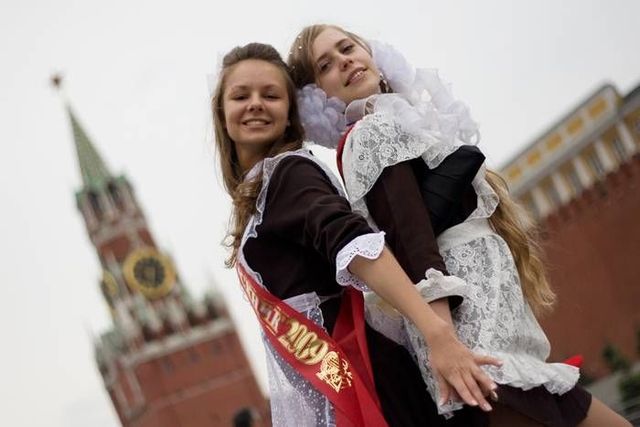
How Russian youth celebrates their graduation day (60 pics)

It is a very important day for the Russian high school students, because next it’s an adult life that is waiting for them.
That's why they try to make a big party and to have fun.


How Russian youth celebrates their graduation day (60 pics)

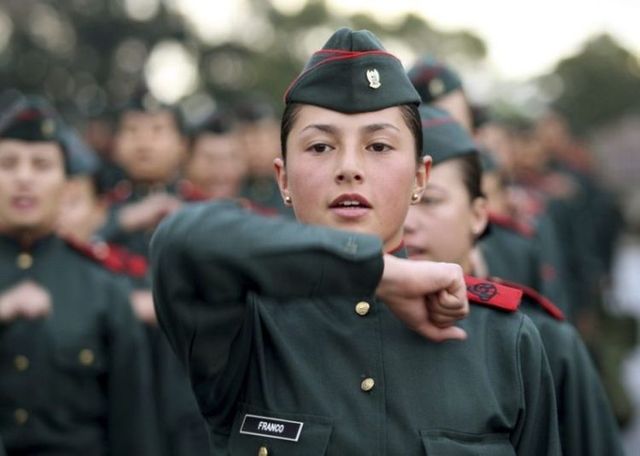
Girl in school military

I don’t know why but I love girls in uniforms. There’s something about it. And when they have guns – it’s just the best. I find it very sexy )
Do you remember bonus pictures with a smoking hot girl, a car and a gun? I put this pics in my bookmarks. Just for the record – her big breasts have nothing to do with it ;)


Girls in military school of Colombia (13 pics)

Monday, November 23, 2009

valentine khmer


Obama's 2009


Military woman


COP15

he pre-Christmas winter period in Copenhagen promises to be a hot affair, at least if the militant activist group Never Trust A Cop (NTAC) has anything to do with it. A YouTube video and the organisation’s website seem to be issuing a call to militant activists across Europe to take firm action in Copenhagen during the conference.
“The COP15’s inevitable talk of ‘saving the world from the climate crisis’ is an elaborate hoax to disguise the COP15’s true purpose: to restore the legitimacy of global capitalism by inaugurating an era of “green” capitalism,” the organisation says on its webpage.
“It is time to state why we think that insurrection is needed to actually begin the change everybody is so desperate for,” it adds.
In its YouTube video, the organisation shows still pictures of fires in Copenhagen streets and clashes between Danish police and activists.
“In Copenhagen 7th – 18th December, COP15 will try to get capitalism back on track. We don’t. We will go to Copenhagen to show a dead system how to die,” the video says.
Police aware of group
The COP15 police task force is aware of the network.
“We have always known that there are groups who want to set another agenda and are only coming to Copenhagen to make trouble,” says Assistant Commissioner Mogens Lauridsen who heads the task force.
Inner city
In its on-line material, NTAC is urging militants to remain in the inner city during a major demonstration tabled for December 12 at the Bella Centre, where COP15 is being held.
“You have a choice! Make your voice heard - refuse to be herded. Stay in the city. Choose your own space and way of protest. We need all forms of action to achieve real change,” NTAC says on its website.
NTAC says it was formed as a network to mobilise ‘the radical left’ towards the COP15 summit in Copenhagen and claims that having achieved its mobilisation, the network has been dissolved, leaving individual groups to take action independently.
Previous summits
Previous summits in Gothenburg in 2001 and particularly at the G8 meeting in Rostock in 2007 have ended in violent street battles between police and activists.
“We have seen what happened in Rostock. We will do everything to avoid street battles – but we probably won’t be able to completely avoid trouble, if that is the agenda that is being set,” Lauridsen says.
He adds that it will make things easier for police if activists remain in the inner city during the Dec. 12 demonstration rather than joining the demonstration at the Bella Center.
“If they split off and remain in the city, it’s easier for us to manage them. Overall it’s more difficult to handle if they hide in a large group of peaceful demonstrators and we have to go in and get them,” Lauridsen says, adding that the police force feels well-prepared for the job at hand

COP15 militants on warpath

COP15 militants on warpath

A network of militants appears to be promising trouble at the COP15 climate summit in December.

Sunday, November 22, 2009

Girl Soldiers 18-year-old

Girls, soldiers, women: 18-year-old inductees in the Israeli army
papo-israeli-army-girl-soldiers-lensculture-photography.jpg
Military kiosk counter, Shaare Avraham, Israel, 2004, © Rachel Papo


Photographer Rachel Papo served in the Israeli army when she was 18 years old. Years later, when she was still trying to come to terms with that confusing period of her life, she returned to the army bases of Israel to photograph a new wave of soldiers in training. Her series, Serial No. 3817131, offers a rare and candid look at the innocent young people who are forced to put their normal lives on "hold" while they prepare to fight deadly wars.
Lens Culture is very happy to present 20 compelling images from that series, accompanied by an articulate and thoughtful text written by the photographer.

Military woman


Apologies to those who saw an imcomplete earlier version of this post on Monday. Slight glitch on the button-pushing front when I was distracted by snails-pace server response times.

It's All about the Rank

New research shows that minorities and women have the highest job satisfaction ratings among those serving in the military.

female, recruits, military

F-15E Strike Eagle


The F-15E Strike Eagle is a superior next generation multi-role strike fighter that is available today. Its unparalleled range, persistence and weapons load make it the backbone of the U.S. Air Force (USAF). A complement of the latest advanced avionics systems gives the Strike Eagle the capability to perform air-to-air or air-to-surface missions at all altitudes, day or night, in any weather.
A derivative of earlier F-15 model aircraft (A-D), the F-15E Strike Eagle includes the following attributes:
  • Unmatched combat radius and persistence
  • Advanced digital electronic controlled higher thrust engines
  • Max speed greater than twice the speed of sound
  • More than 23,000 pounds of payload, including air-to-air and air-to-ground weapons such as the:
    • the Joint Direct Attack Munition (JDAM)
    • the AGM-130
    • the Advanced Medium Range Air-to-Air Missile (AMRAAM)
    • AIM-9X

  • An Active Electronically Scanned Array (AESA) radar
  • A digital threat warning system
  • A Service life that will allow it to be viable until at least 2035
The F-15E is produced by Boeing and will be in the U.S. Air Force (USAF) inventory well into the 21st century

Friday, November 20, 2009

Govt seizes Thai airport firm


THE government took control of the Thai-owned aviation firm Cambodia Air Traffic Services (CATS) on Thursday and banned its Thai employees from the offices after the arrest of one of their co-workers on suspicion of stealing the flight schedule of fugitive Thai former prime minister Thaksin Shinawatra during his visit to Cambodia last week.

The move, which is likely to further damage diplomatic relations between the two countries, comes amid accusations by a Thai opposition leader that Thailand’s foreign minister ordered the theft.

CATS is a fully owned subsidiary of Bangkok-based Samart corporation, which has a 32-year air traffic control concession and employs nine Thai nationals in Cambodia.

It has been placed under the caretakership of a Cambodian government official, though representatives from the Civil Aviation Authority declined to comment on the official’s identity or the duration of the caretakership.

“The caretaker has prohibited the Thai expatriates from performing their duties,” Samart vice chairman Sirichai Rasameechan said in a letter to Thailand’s stock exchange, where the company is listed.

Council of Ministers spokesman Phay Siphan said Cambodia’s takeover of CATS was “temporary” but necessary “to ensure national security and public safety.” The financial operations of the company, he added, would not be affected.

The move follows last week’s arrest of CATS employee Siwarak Chotipong, a 31-year-old Thai accused of spying, who is currently being held in pretrial detention at Prey Sar prison.


Thaksin is not the prime minister of cambodia – he is a convicted man....


Cambodian officials say that Siwarak was ordered to steal the flight schedule by Kamrob Palawatwichai, the first secretary of the Thai embassy in Phnom Penh. Kamrob was expelled last week, and Thailand responded by expelling the first secretary of the Cambodian embassy in Bangkok.

Both countries had already withdrawn their respective ambassadors in the row over Thaksin’s appointment as government economics adviser.

Siwarak is being charged under Article 19 of the 2005 Law on Archives, which covers offences related to matters of national defence, security or public order. If convicted, he faces up to 15 years in prison.

Kav Soupha, Siwarak’s defence attorney, said Thursday that he did not believe that the leaking of Thaksin’s flight schedule constituted a threat to Cambodia’s national security.

“Thaksin is not the prime minister of Cambodia – he is a convicted man who is being hunted by Thai authorities,” Kav Soupha said. “Even if [Siwarak] had reported to the Thai embassy, that would be according to his right and obligation as a Thai citizen to alert authorities about a fugitive.”

Kav Soupha added that he planned to request that Siwarak be released on bail.

Jatuporn Prompan, a parliamentarian from the opposition Puea Thai party, said Wednesday that he had an audio tape of Thai Foreign Minister Kasit Piromya ordering the flight schedule theft of which Siwarak is accused, the Bangkok Post reported.

Thai Foreign Ministry deputy spokesman Thani Thongphakdi, however, said officials in his ministry “do not believe in the existence of such a tape”.

Cambodian Foreign Ministry spokesman Koy Kuong said he had no knowledge of such evidence.

Kasit said Thailand would have to gather further information about the CATS takeover before formulating a response.

“The ministry is waiting for reports from the Thai embassy and we will also have to get clarification from the Cambodian government. If it violates bilateral agreements, then we will find ways to proceed from there,” the Bangkok Post quoted Kasit as saying.

Secrecy ordered
As tensions between Thailand and Cambodia simmered, the government released a directive on Wednesday in which the Ministry of Interior called on all government officials to encrypt their communications to “protect information related to national security”.

The statement, signed by Interior Minister Sar Kheng on October 15, touted, without specifically describing, newly acquired encryption technology that will “guarantee secrecy, so that government information will not be leaked”.

Interior Ministry spokesman Khieu Sopheak said such measures were necessary in Cambodia’s present diplomatic circumstances.

“If Thaksin would have been arrested because of [Siwarak] leaking information about him, that would prove we could not keep sensitive information a secret.”

Wednesday, November 18, 2009

sing khmer


Tuesday, November 17, 2009

music khmer


sing khmer


Sunday, November 15, 2009

Joining APEC seen as likely for Cambodia

CAMBODIA will be well-placed to gain Asia Pacific Economic Cooperation forum (APEC) membership if a moratorium on new members is allowed to lapse as expected at the ongoing APEC summit in Singapore, sources in Singapore said Thursday.
Among the dozen nations applying to join the trade and investment forum, India and Cambodia are in the strongest position, the sources said, speaking on condition of anonymity. India is in line for acceptance due to the sheer size of its economy, and Cambodia because it already supports open trade and is a member of the World Trade Organisation and ASEAN.
Cambodia also has a coastline open to the Pacific, which other aspiring members such as Mongolia and Laos do not.
APEC, which seeks to liberalise trade and investment in the Asia-Pacific region, currently has 21 members.
After it was formed in 1989, APEC expanded rapidly before placing a moratorium on new members in 1993. The moratorium, which was originally set to expire in 1996 but has been extended several times, is now set to expire in 2010. It is expected that it will not be renewed in Singapore.
US officials said Cambodia would be a welcome addition because Phnom Penh’s foreign policy supports a more liberal trading system.
Singapore’s senior minister, Goh Chok Tong, will visit Cambodia at the end of this month.
APEC agreed the “Bogor Declaration” in 1994 to create free trade among its developed economies by 2010 and emerging economies by 2020.

Diplomats expelled in tit-for-tat


CAMBODIA and Thailand expelled senior diplomats from their respective embassies on Thursday, the same day that fugitive Thai former prime minister Thaksin Shinawatra told an audience in Phnom Penh that Thailand’s current leadership is guilty of “false patriotism”. “We declared the first secretary of the Thai embassy as persona non grata,” Cambodian Ministry of Foreign Affairs spokesman Koy Kuong said. “We just declared that, and then Thailand reciprocated, meaning our first secretary to the Cambodian embassy in Bangkok will come back, too.” Asked to explain the Cambodian government’s decision, Koy Kuong said only that the Thai first secretary “performed his duty contrary to his position”. Council of Ministers spokesman Phay Siphan said the expulsion was the result of Thailand being “arrogant”. “Cambodia did not make the first move. This follows the recall of the Thai ambassador,” he said. “We should respect each other through diplomatic channels, but Thailand doesn’t respect them. They overreacted.” Thai Ministry of Foreign Affairs deputy spokesman Thani Thongphakdi confirmed the expulsion, though he added that both countries have maintained personnel at their respective embassies. “We still have a presence, and they, too, still have a presence. The channel of communication is still open,” he said. The expulsions mark the latest step in the countries’ ongoing row over Cambodia’s appointment of Thaksin as a government economics adviser. In response to this appointment, Thailand withdrew its ambassador to Cambodia last week, and Cambodia responded in kind. Thaksin was deposed in a 2006 coup and self-exiled last year to avoid a prison term for corruption charges. Speaking in his new advisory capacity on Thursday morning, Thaksin emphasised the need for cooperation between Thailand and Cambodia as he told a gathering at the Ministry of Economy and Finance that the two countries’ economic fortunes are inextricably linked. But he added: “Of course, not all my compatriots see it that way right now. “I do not believe those who do not share our vision right now are myopic. Their domestic political compulsions force them to false patriotism. Let’s pray that they, too, will one day appreciate this partnership for progress,” he said. In the conference’s opening address, Finance Minister Keat Chhon said Thaksin’s tenure as prime minister “is generally agreed to have been one of the most distinctive in the country’s modern history”. “Whatever the critics say about Thaksinomics, the achievements were astonishing,” Keat Chhon said. Thaksin and Keat Chhon were speaking at a conference titled “Cambodia and the World After the Financial Crisis”, attended by about 300 economic experts and members of the business community. Security at the conference was heavy, with members of Prime Minister Hun Sen’s personal bodyguard unit providing protection for Thaksin. Members of the media were ushered out of the conference hall minutes after Thaksin began speaking. Following the lecture, Thaksin travelled to Siem Reap, where he visited the Angkor Wat temple complex and planned to play golf with Hun Sen on Friday, Siem Reap provincial Governor Sou Phirin said. The onetime telecommuncations mogul was greeted upon arrival in Siem Reap by members of Thailand’s Red Shirts, and the Bangkok Post reported Thursday that parliamentarians from the opposition Puea Thai party planned to travel to Cambodia “to drink with their former party leader on Friday night until dawn before seeing him off to Dubai on Saturday morning”. In Bangkok, about 150 protesters rallied outside the Cambodian embassy on Thursday and delivered an open letter telling Hun Sen not to interfere in Thailand’s justice system, Thai police said. Speaking before the diplomats’ expulsion Thursday, Thai Prime Minister Abhisit Vejjajiva said he was considering further retaliatory measures against Cambodia. He added, however, that his government would not seal the border, and that the rift with Phnom Penh would not lead to violence. “I don’t want the situation going out of control,” he said.

Thai national arrested for espionage

A Thai national has been arrested and accused of espionage for allegedly stealing the flight schedule of fugitive former Thai Prime Minister Thaksin Shinawatra, amid an ongoing row between Thailand and Cambodia over Thaksin’s appointment as government economics adviser, Phnom Penh police and court officials said. Sok Phal, director of the Ministry of Interior’s Central Security Department, said 31-year-old Siwarak Chotipong, an employee at Cambodia Air Traffic Services Co., was arrested by officers from the Central Security Department at his office on Wednesday. “He stole the special flight schedule of Mr. Thaksin and handed it to the first secretary of Thai Embassy,” Sok Phal said. “It is not his duty to do so. What he did was beyond his responsibility. He must face legal action.” On Thursday, the Cambodian government expelled the first secretary at the Thai embassy in Phnom Penh, with Thailand responding in kind. Cambodia Ministry of Foreign Affairs spokesman Koy Kuong would not confirm whether the expulsion was related to the airport case. “It’s a case of the court. It’s the court’s affair,” he said, adding that the Thai first secretary had “performed his role contrary to his position.” Sok Phal, however, said the first secretary was directly involved and had been expelled as a result. "He ordered the man to copy the schedule of Thaksin's return flight, and that's why he was expelled," Sok Phal said. In Bangkok, Thai Foreign Minister Kasit Piromya forcefully rejected the espionage accusations. "It's not true. It is a malicious and false claim," Kasit said. "Thaksin feels he must destroy Thailand and collaborate with Hun Sen." Thaksin was deposed in a 2006 coup and self-exiled last year to avoid a jail term for corruption charges. Last week, Cambodia announced Thaksin’s official appointment as government economics adviser, prompting Thailand to withdraw its ambassador to Phnom Penh and Cambodia to reciprocate. Phnom Penh court deputy prosecutor Sok Roeun said Sivarak is now in pre-trial detention at Prey Sar prison and is being charged under article 19 of the 2005 Law on Archives, which covers offenses related to matters of national defence, security or public order. If convicted, Sivarak faces a jail term of between seven and 15 years and a fine of between 5 and 25 million riels (US$1198-5990). Police are now investigating whether more people were involved with the plot, Sok Phal said.

Saturday, November 14, 2009

khmer mystery


politic khmer


Red Shirts Meet Thaksin in Cambodia

A dozen of shirted supporters of former Thai Prime Minister Thaksin Sinawatra on Thursday afternoon crossed the border to meet with their fugitive leader in Siem Reap province, about 100 km from Thai border in Sisaket province.
The red shirts showed their support for Thaksin, some with tears, and welcomed Thaksin’s appointment as the PM Hun Sen’s economic advisor.
The meeting came a day after Thaksin gave a lecture on economics to more than 300 Cambodian Gover- nment officials at the Ministry of Economy and Finance on Thursday morning.
According to the source, the red shirts blamed the Bangkok Govern-ment led by Abhisit for Thailand’s economic and social troubles.
Singing “We love Thaksin!” in Thai and English, the protesters, who had crossed the border from northeastern Thailand, gave the billionaire tycoon roses and hugs as he arrived at a hotel in Siem Reap, reported AFP.
“I am very happy to see him. We hug him and he hugs us,” Taradang Chinin, a representative of the group who travelled from their homes in Thailand the previous day, told AFP in the lobby of the Nokor Kokthrok hotel.
“The Thai Government right now is a big cheater. Thaksin, when he was prime minister, he thought about poor people. He shared his love for people. He is very popular,” supporter Taradang said. Meanwhile, according to reports from the Poipet International Border Crossing in Banteay Meanchey province, a group of Thai soldiers warned and stopped some red shirts crossing to Cambodia to meet Thaksin. The black-clad soldiers claimed the red shirts did not hold valid passports so did not allow them to cross the border.
Over 30 red shirts made the trip to Phnom Penh to show their support Thaksin as he was appointed as a Cambodia Government economic advisor by Cambodian King Norodom Sihamoni on October 27.
However, even though Thai black-clad soldiers blocked the red shirts, the border is still normal and citizens can come and go through the border gate as usual.
“Even though the two countries’ diplomatic ties are down, the situation at the Poipet gate is still normal and citizens can do their business as usual,” Banteay Meanchey Sub-Governor Ou Long Dy told DAP News Cambodia on Thursday.
“Thai citizens can come to gamble in Cambodia casinos as usual,” he added. In his lecture on economi cs to Cambodian Government Thaksin recommended that Cambod ia focus on tourism, agriculture, rural development and natural resource extraction.
“I would like to see broadcasting about the tourism field among Cambodia, Laos, and Thailand and each nation should strengthen quality standards and safe tourism services,” Thaksin said.


Thursday, November 12, 2009

Thailand Must Abide by Overlapping Claims Agreement: Var Kim Hong

Thailand must implement the MoUs on gas and oil development and maritime boundary demarcation agreed with Cambodia as part of its international obligations, Var Kim Hong, Cambodian head of the Joint Border Committee (JBC), said on Tuesday.

Thailand cannot cancel or back out of the MoU signed in 2001 with Cambodia “because MoU is the tool of international legal procedures,” he told reporters at a press conference at the Council of Ministers. Thailand must abide by international law, he said.
Thailand may only amend its MoUs with Cambodia as the MoUs are “the heritage of previous Govern- ment,” signed between Cambodia and Thailand under the Thaksin Govern- ment, he added. The Thai Cabinet on Tuesday revoked an MoU on overlapping maritime boundaries agreed and signed by Thailand and Cambodia in 2001, the Thai News Agency (TNA) reported. The Cabinet directed the Ministry of Foreign Affairs to review the legal issues as the revocation of the MoU must be forwarded to Parliament for its consideration under Article 190 of the Thai Cons-titution, which requires the Govern-ment to seek approval from Parliament before signing an agreement with another country. Certain renegade factions of Thai extreme nationalists have already mistakenly attempted to request the withdrawal of Cambo- dia’s UNESCO registration for the Khmer Preah Vihear temple. Now the tactic seems to have crossed into the mainstream.
The Thai Cabinet has apparently discussed the action with several agencies including the Office of the Council of State, the Thai-Cambodian Joint Boundary Commission (JBC) and the ministry’s Department of Treaty and Legal Affairs, before making the decision. Thai-Cambo- dian relations have soured over border issues and Thaksin’s appointment as Cambodian Government and economic advisor to PM Hun Sen last week. Thailand recalled its ambassador from Cambodia, with Cambodia subsequently doing likewise.


Thaksin Lands Phnom Penh Amid Tightened Security

Former fugitive Thai PM Thaksin Sinawatra on Tuesday morning landed at a Phnom Penh military airport.

Tight security with many soldiers and police deployed ensured a safe arrival for Thaksin.
Hing Bun Heang, the Royal Government of Cambodia Air Forces (RCAF) Deputy Chief and Cambodia Prime Minister Hun Sen’s body guard headquarter chief and Prak Sokhun, Secretary of Stare of the Council for Ministers along with the Premier’s oldest son, Hun Maneth accompanied by high ranking soldiers and police.
Thaksin’s arrival in Cambodia come after the Cambodian King endorsed him as advisor to the Government and the premier’s economic advisor. Thaksin’s presence will be his first visit to Cambodia after he was ousted by a military coup in September, 2006. He has previously visited Siem Reap province to play goal with PM Hun Sen.
Following Thaksin’s arrival in Cambodia, Bangkok leaders are said to be focusing on seeking to extradite Thaksin from Cambodia, but the Cambodian Government has already stressed it will not extradite Thaksin from Thailand. “Thaksin will visit Phnom Penh this week and he is to lecture over 300 Cambodian economists at the Ministry of Economy and Finance on Thursday,” the premier told reporters at Phnom Penh International Airport after he returned from Tokyo.
Thaksin, who was prime minister from 2001 to 2006 before being toppled in a bloodless coup, faces a two-year jail sentence in Thailand for abuse of power. He has been living in self-imposed exile, mostly in Dubai, since August 2008.
Thaksin was overthrown after he lost the backing of Thailand’s Bang kok-based middle class and political elite. He remains popular with the poor because of his populist economic policies.
Thailand withdrew its ambassador to Phnom Penh last week after the Cambodian government announced Thaksin’s appointment. Cambodia reciprocated by recalling its ambassador as ties between the neighbors hit their lowest point in years.


Cambodia Refuses to Extradite Thaksin


Prime Minister Hun Sen on Wedn- esday stressed that his Government had already rejected an extradition request for former PM Thaksin Shinawatra because is Thaksin is now an economic adviser to himself and the Government, an appointment approved by the Cambodian king. Bangkok sent a formal extradition letter to the Cambodian Foreign Ministry yesterday.
Speaking to report- ers at a press conference at his house in Takmao after his talks with Thaksin lasting around one-and-a-half hours, Hun Sen read out a statement detailing why the Cambodian Foreign Ministry had handed back Thai documents submitted to seek Thaksin’s extradition.
Thaksin was also present at the press conference.
Thaksin appeared in Phnom Penh after arriving at a military airstrip in his own jet on Tuesday.
Hun Sen showed the Cambodian refusal of the Thai extradition letter in front of Thaksin and handed out a copy of the statement to Thaksin detailing Cambodia’s stance not to extradite Thaksin.
The Cambodian Government referred to Article 3 of the Extraction treaty between the two countries which prohibits extraditing a person for a political offence.
Thaksin said that he understood the extradition request, but he declined to do into the details of his case.
Hun Sen stressed Thaksin’s competency to lead his country during his term as Thai Prime Minister.
The premier claimed a relationship between the ruling Thai Prime Minister Abhisits’ party and Cambo- dia’s eponymous opposition Sam Rainsy Party.
Referring to a rumor that the Thai Government will appoint Sam Rainsy as an advisor, the premier said he welcomed the right of a Cambodian to become a Bangkok Government advisor. Thaksin’s said his intention is to develop Thailand and help all Thais.
Asked how he will help and develop Cambodia as Cambodia suffers the effects of the downturn, Thaksin said: “Firstly, I am going to share some economic ideas to Cambodian Government economic officials to provide more understanding in this field. Secondly, I am trying to help reduce poverty in Cambodia by using my policy implemented Thailand when I was the premier. Lastly, I will attract more investors to do business and invest in Cambodia, and provide confidence to those investors.”
Thaksin said that helping Cambo- dia become developed will also benefit Thailand.

Tight security, with many soldiers and police deployed, ensured a safe arrival for Thaksin.
Thaksin’s arrival in Cambodia comes after the Cambodian King endorsed him as advisor to the Government and the premier’s economic advisor. Thaksin’s presence will be his first visit to Cambodia after he was ousted by a military coup in Septe- mber, 2006. He has previously visited Siem Reap province to play goal with PM Hun Sen.
Thailand withdrew its ambassador to Phnom Penh last week after the Cambodian government announced Thaksin’s appointment. Cambodia reciprocated by recalling its ambassador as ties between the neighbors hit their lowest point in years. Thaksin, who was prime minister from 2001 to 2006 before being toppled in a bloodless coup, faces a two-year jail sentence in Thailand for abuse of power. He has been living in self-imposed exile, mostly in Dubai, since August 2008.
Thaksin was overthrown after he lost the backing of Thailand’s Bangkok -based middle class and political elite. He remains popular with the poor because of his populist economic policies.


The ‘eternal friends’ speak


In a joint interview with Thaksin broadcast on state-run TVK television on Wednesday afternoon, Hun Sen spoke of the partnership between his Cambodian People’s Party and Puea Thai, a Thai opposition party with which Thaksin is associated. Hun Sen also alluded to this partnership when he met with Puea Thai’s Chavalit Yongchaiyudh last month.
“We have a party-to-party relationship between the CPP and Puea Thai, which was originally Thai Rak Thai,” Hun Sen said, referring to Thaksin’s former party.
“Now this party has transformed itself into Puea Thai, but this party relationship continues. The leaders of the CPP and the leaders of Puea Thai can meet each other at any time, at any place, and can even hold a summit meeting together.”
Even as he threw his support behind the Thai opposition, however, Hun Sen dismissed the possibility that the recent row with Thailand could escalating into armed conflict, characterising it as a dispute between politicians rather than populations.
“It is a dispute between Abhisit and Hun Sen,” he said, adding: “If there is a dispute between people and people, how could Thaksin and I be talking together? He is also a Thai.”
In the same interview, Thaksin defended his acceptance of the advisory role and accused the Thai administration of holding a “Cold War” mindset in its antagonism towards him and the Cambodian government.
“Whatever I say, the [Thai] government will be against, so actually, in this 21st century, we should have some dialogue,” Thaksin said, adding: “If I can help, it will be beneficial to Cambodia and to Thai people as well.”


Extradition of Thaksin shot down


CAMBODIA rejected a formal request by the Thai government on Wednesday for the extradition of visiting Thai ex-premier Thaksin Shinawatra, who faces a two-year prison term in Thailand after being convicted of corruption in absentia in 2008.
In a statement reiterating a promise the government has made repeatedly over the past few weeks, the Ministry of Foreign Affairs said it would not extradite Thaksin, who was deposed in a 2006 coup and self-exiled last year to avoid imprisonment in Thailand for the “politically motivated” corruption conviction.
“The condemnation of HE Thaksin Shinawatra is logically the consequence of the military coup d’etat in September 2006, which resulted in his removal from the post of prime minister, while he was overwhelmingly and democratically elected by the Thai people,” the statement read.
In Bangkok, Thai Prime Minister Abhisit Vejjajiva condemned the Cambodian refusal to extradite Thaksin.
“My government wants bilateral ties to be normal, but Cambodia’s political standpoint is incorrect, inappropriate and against international principles,” Abhisit said.
Thai Ministry of Foreign Affairs deputy spokesman Thani Thongphakdi said Thailand was weighing its options after the rejection.
“We have received a copy of the diplomatic note that the Cambodian side has sent to us, and at the moment, our legal people are examining the details and the contents of the letter,” Thani said, adding that the Thai legal team would make a policy recommendation for the government to consider.
Abhisit has threatened to terminate the extradition agreement between Thailand and Cambodia in the event that a request for Thaksin is denied, though Thani said that his government has not yet settled on a response.
“I think a review of all the agreements that we have is being examined. I don’t want to prejudge what the outcome of that review will be,” he said.
Last week, Thaksin was officially appointed economics adviser to the Cambodian government and personal adviser to Hun Sen. In response, Thailand withdrew its ambassador to Phnom Penh, and Cambodia responded in kind.


Thaksin accuses Abhisit government of 'false patriotism'

Thailand's current leadership is guilty of “false patriotism”, fugitive ex-Thai prime minister Thaksin Shinawatra told an audience in Phnom Penh on Thursday.

Speaking in his new capacity as economics adviser to the Cambodian government, Thaksin stressed the need for cooperation between Thailand and Cambodia as he told a gathering at the Ministry of Economy and Finance that the two countries’ economic fortunes are inextricably tied, adding: “Of course, not all my compatriots see it that way right now.”
“I do not believe those who do not share our vision right now are myopic. Their domestic political compulsions force them to false patriotism. Let's pray that they, too, will one day appreciate this partnership for the best,” he said.
Thaksin was deposed in a 2006 coup and self-exiled last year to avoid a jail term for corruption charges. His remarks came just one day after Cambodia denied an extradition request for him by Thailand – the latest move a row that saw the countries withdraw their respective ambassadors last week
In the conference’s opening address, Minister of Finance Keat Chhon said Thaksin’s tenure as prime minister “is generally agreed to have been one of the most distinctive in the country’s modern history”. The finance minister praised policies of Thaksin that were designed to appeal to his country’s “rural majority”, including micro-credit development and subsidised healthcare.

“Whatever the critics say about Thaksinomics, the achievements were astonishing,” Keat Chhon said.
Thaksin and Keat Chhon were speaking at a conference titled “Cambodia and the World After Financial Crisis”, attended by about 300 economics experts and members of the business community.
Security at the conference was heavy, with members of Prime Minister Hun Sen’s personal body guard unit providing protection for Thaksin. Reporters were ushered out of the conference hall minutes after Thaksin began speaking.


Wednesday, November 11, 2009

Who are the anti-Thaksin protesters?

The opponents of Mr Thaksin call themselves the Peoples' Alliance for Democracy (PAD), and wear yellow shirts to proclaim their allegedly more pro-monarchist stance.

People in Thailand often wear yellow to show their allegiance to the king, and one of the protesters' key claims is that Mr Thaksin is not as loyal to the king as they are.
The PAD is a loose grouping of royalists, businessmen and the urban middle class, led by media mogul Sondhi Limthongkul and Chamlong Srimuang, a former general with close ties to the king's most senior adviser, Gen Prem Tinsulanonda.

The PAD accuses Mr Thaksin of corruption and nepotism during his time in power.
PAD protests were instrumental in setting the scene for a military coup which removed Mr Thaksin from office in 2006.
They repeated these rallies in 2008, to protest against the party in power at the time - the People Power Party (PPP), which was widely seen as a reincarnation of Mr Thaksin's banned Thai Rak Thai party.
The protesters took over Government House for three months, and engineered a week-long siege of Bangkok's main airports in December, crippling the country's vital tourism industry.
Together with several court rulings against the PPP, they are credited with bringing down two of its governments - firstly the administration of Samak Sundaravej and then that of Mr Thaksin's brother-in-law Somchai Wongsawat.
Now that a pro-Thaksin government is no longer in power, the PAD is keeping a close watch on the rising anger inside the UDD camp.


How did Mr Abhisit become prime minister?


Amid the turmoil of the airport blockade in December 2008, a Constitutional Court ruled that the PPP was guilty of electoral fraud and barred its leaders from politics for five years.

There seemed to be no way forward, but then a few Thaksin loyalists changed sides to join the other main party, the Democrats.

This enabled Democrat leader Abhisit Vejjajiva to form a new government and become the next prime minister without calling elections.
The Democrats are not openly allied to one group of protesters or the other, but in the past the party has been closely associated with elements of the PAD.
Mr Abhisit has been criticised for his choice of foreign minister, Kasit Piromya - an open supporter of the PAD movement and its airport blockade.
Where is Mr Thaksin now?
Mr Thaksin describes himself as a citizen of the world, and he is often in Dubai, China, the UK or Hong Kong.
If he comes back to Thailand, he faces two years in jail after being found guilty in a conflict of interest case.
His long-term aims are unclear. In the past he has said he will not re-enter politics, but he has also said he is needed to lead Thailand out of the economic crisis.
He remains actively involved in politics, through the rallies of his red-shirted supporters. These rallies have prompted a vague offer of talks from the Abhisit government, which he has so far rebuffed.
Despite being out of the country, Mr Thaksin has been egging his supporters on in the latest protests, giving regular addresses on video-link.